
Fez to Merzouga in two days.
Sand, sunsets & a spectacular fall.
Camels, sandboarding, a surprisingly comfortable tent—and a roof ride out of camp that still makes us smile.
Our two-day desert trip started and ended in Fez. It included Atlas stops, camel riding, sandboarding, a Bedouin dinner, a tent overnight and a morning jeep ride. We paid €95 each in May 2023 and enjoyed it overall. The main trade-off was the long drive on both days; current tour inclusions need checking.
“This is Africa!”
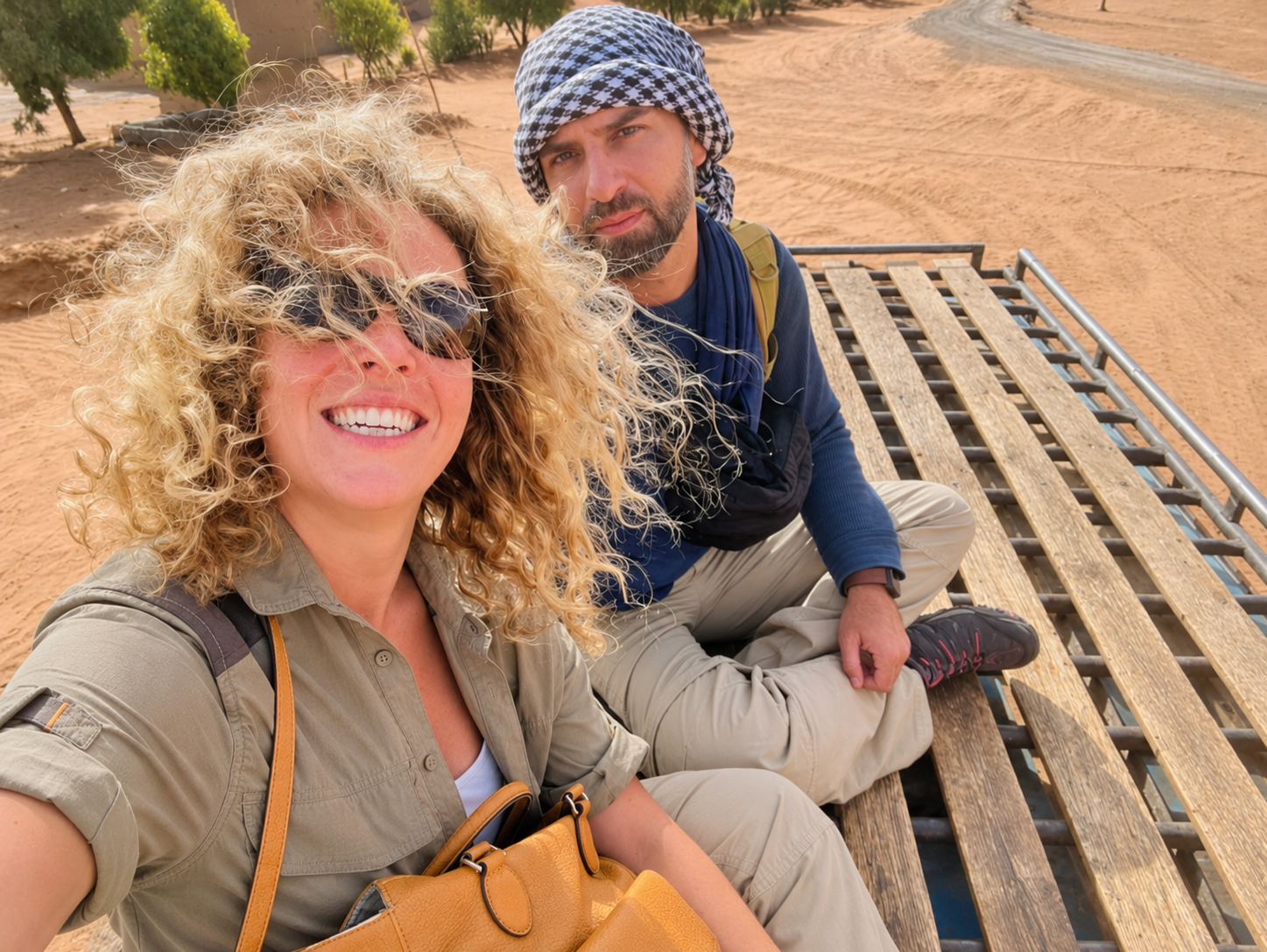
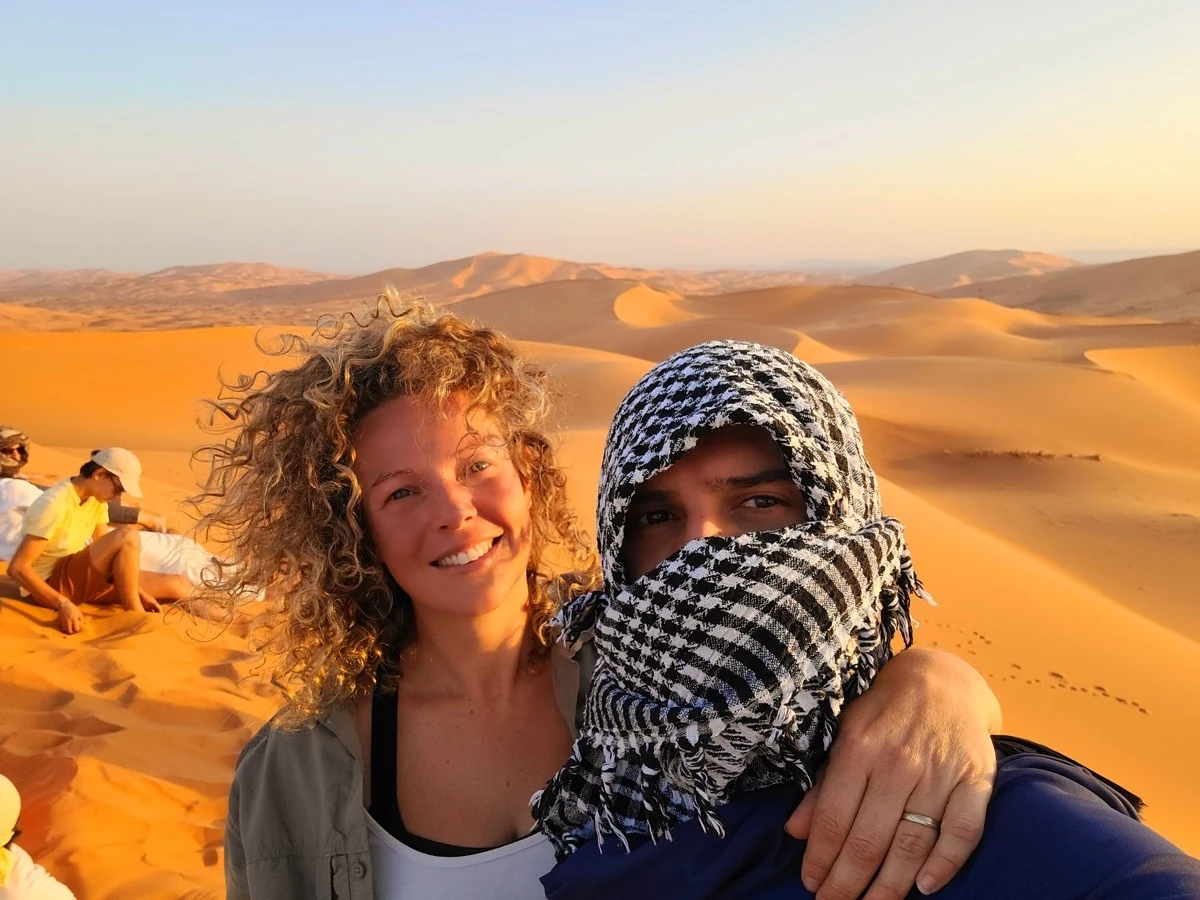
We were on the roof of the jeep, leaving the desert camp with the group and shouting to the people we passed. I was grinning, Miguel was beside me, and a perfectly ordinary transfer had become one of the moments we still talk about. The selfie from up there catches it: curls everywhere, sunglasses on, the sandy ground below and the two of us thoroughly enjoying ourselves.
It was not the only memorable departure from normal life that morning. A little earlier, a curtain in our tent had turned out to be hiding something I would much rather not have walked past five times in the dark. But before the roof ride, the curtain and the argument over whether a hole could have legs, there had been a long road from Fez—and an evening in the dunes worth travelling for.
The road is a large part of the adventure
There is a lot of Morocco between Fez and the dunes. We booked this two-day Fez–Merzouga–Fez tour through GetYourGuide, paying €95 each in May 2023. Saturday was the journey out and our night in camp; Sunday was the return.
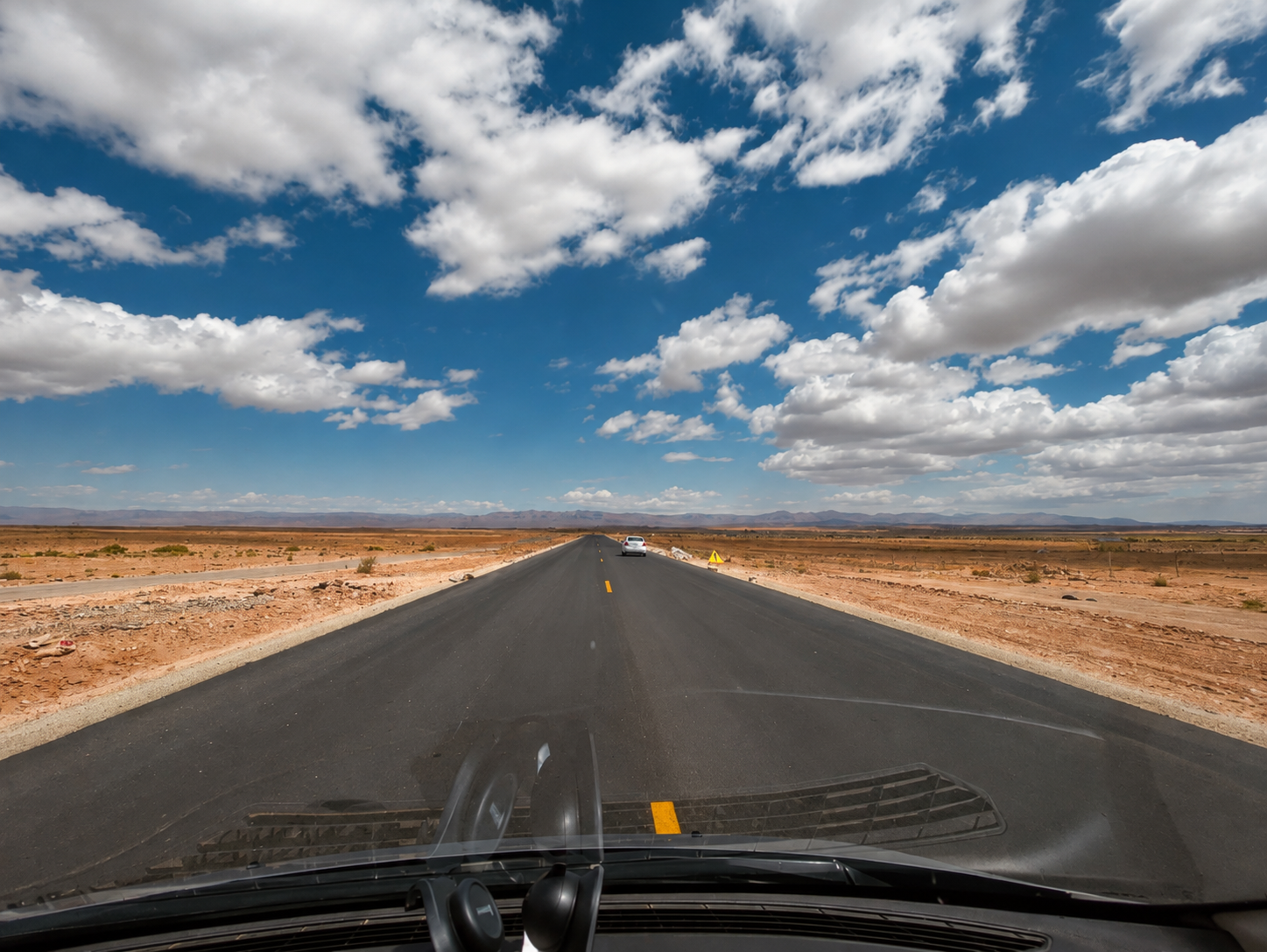
Ifrane, with its steep roofs and “Little Switzerland” nickname, was one of our stops. Then came monkeys along the Atlas route, palms tucked beneath rocky slopes and long stretches of road. Morocco did not suddenly turn into desert the moment we left Fez; watching it change was part of the journey.
It is a beautiful changing landscape, but it is also a lot of sitting in a van. If your idea of a desert break is two slow days at camp, choose a longer itinerary. We only had a weekend, and decided that one evening among the dunes was worth the drive. The Ifrane photographs here are from our return on Sunday.
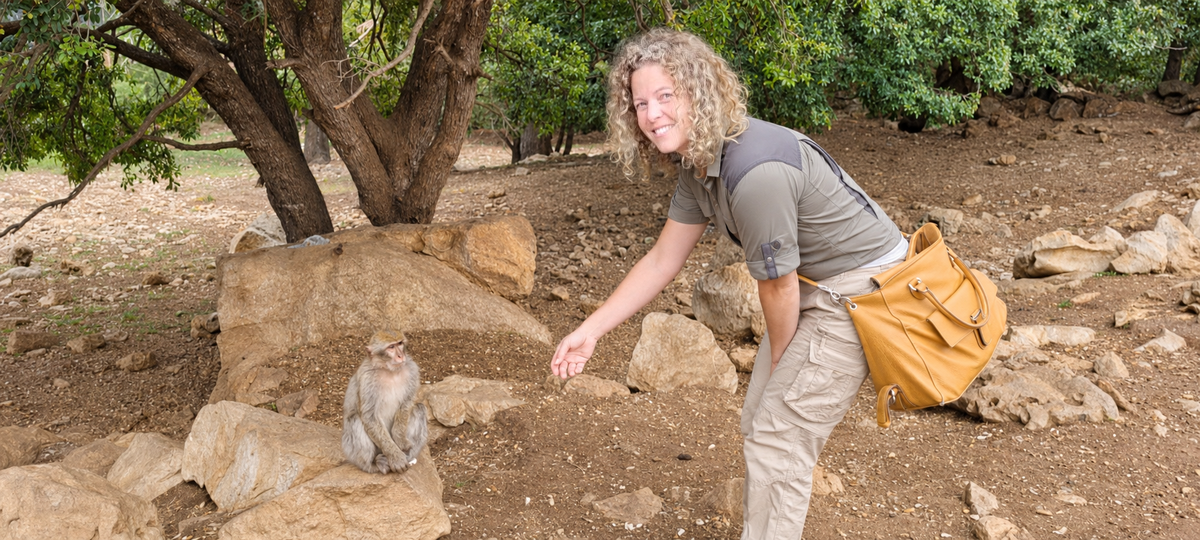
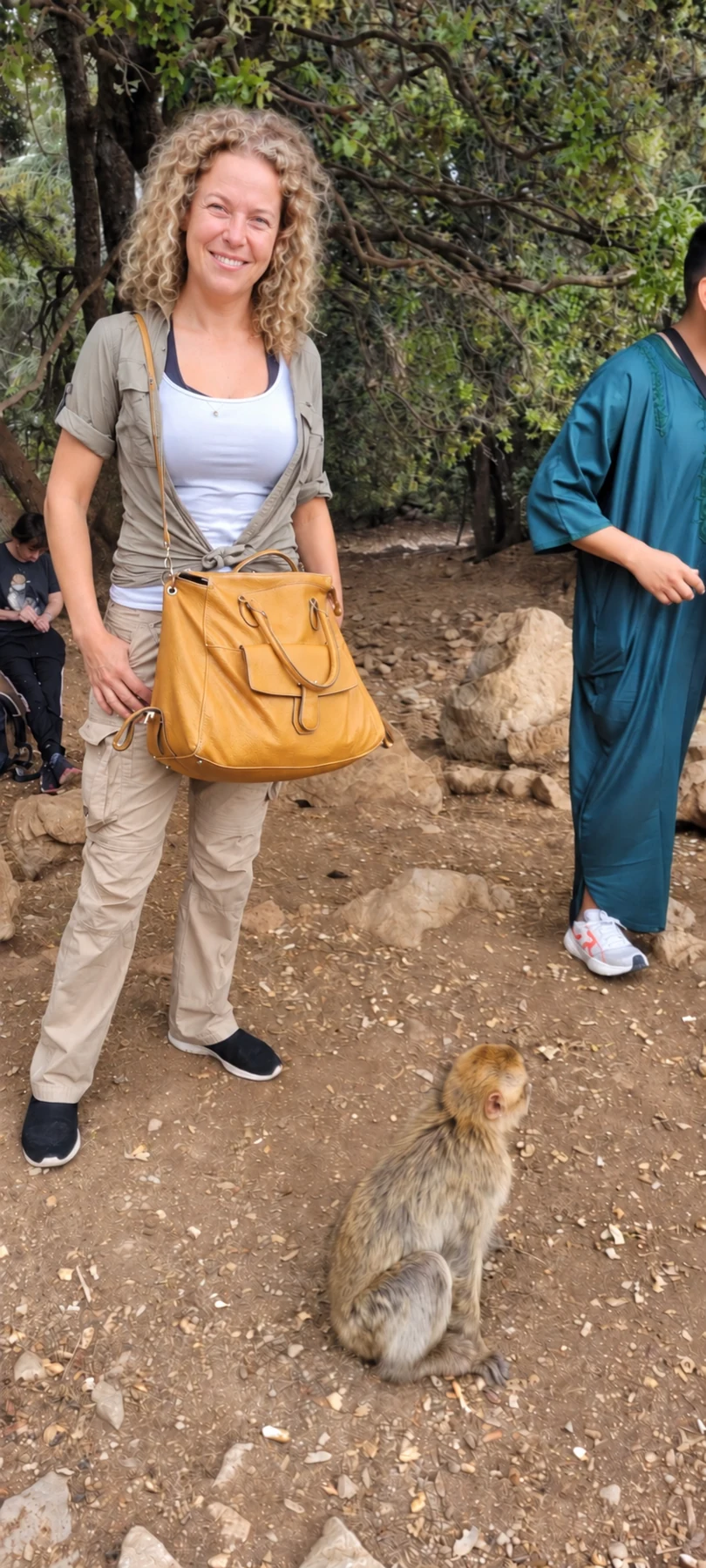
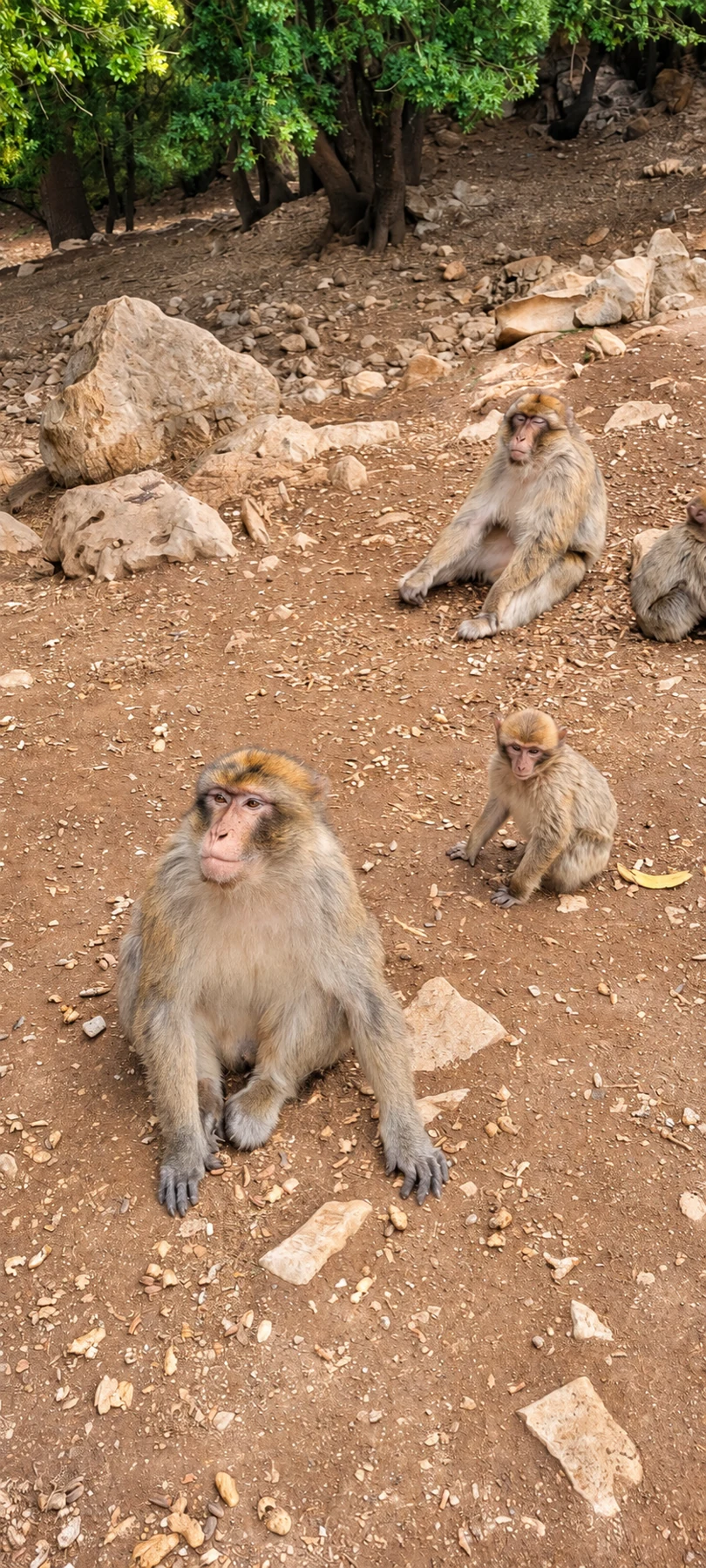
Along the Atlas route 3 photos
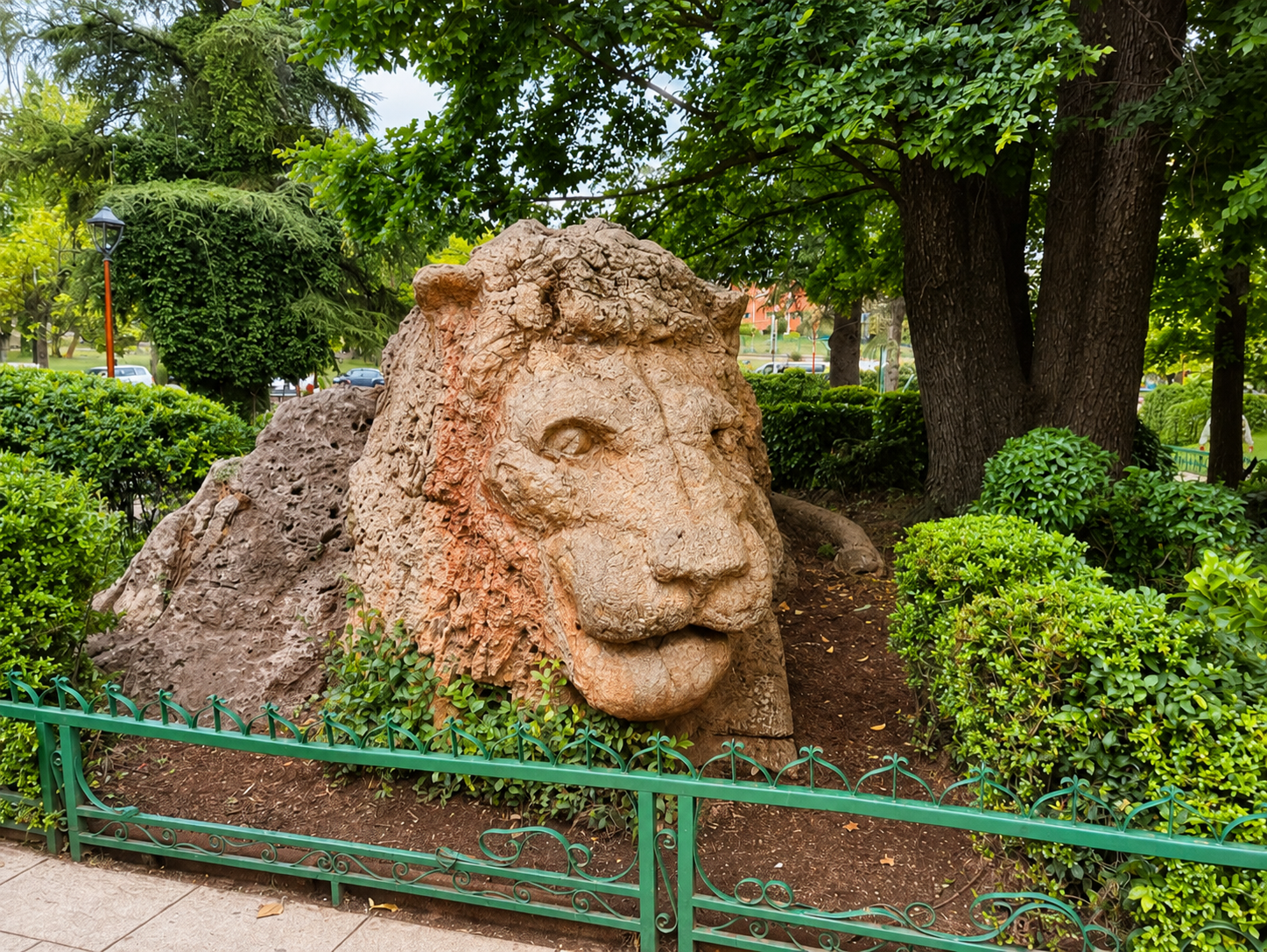
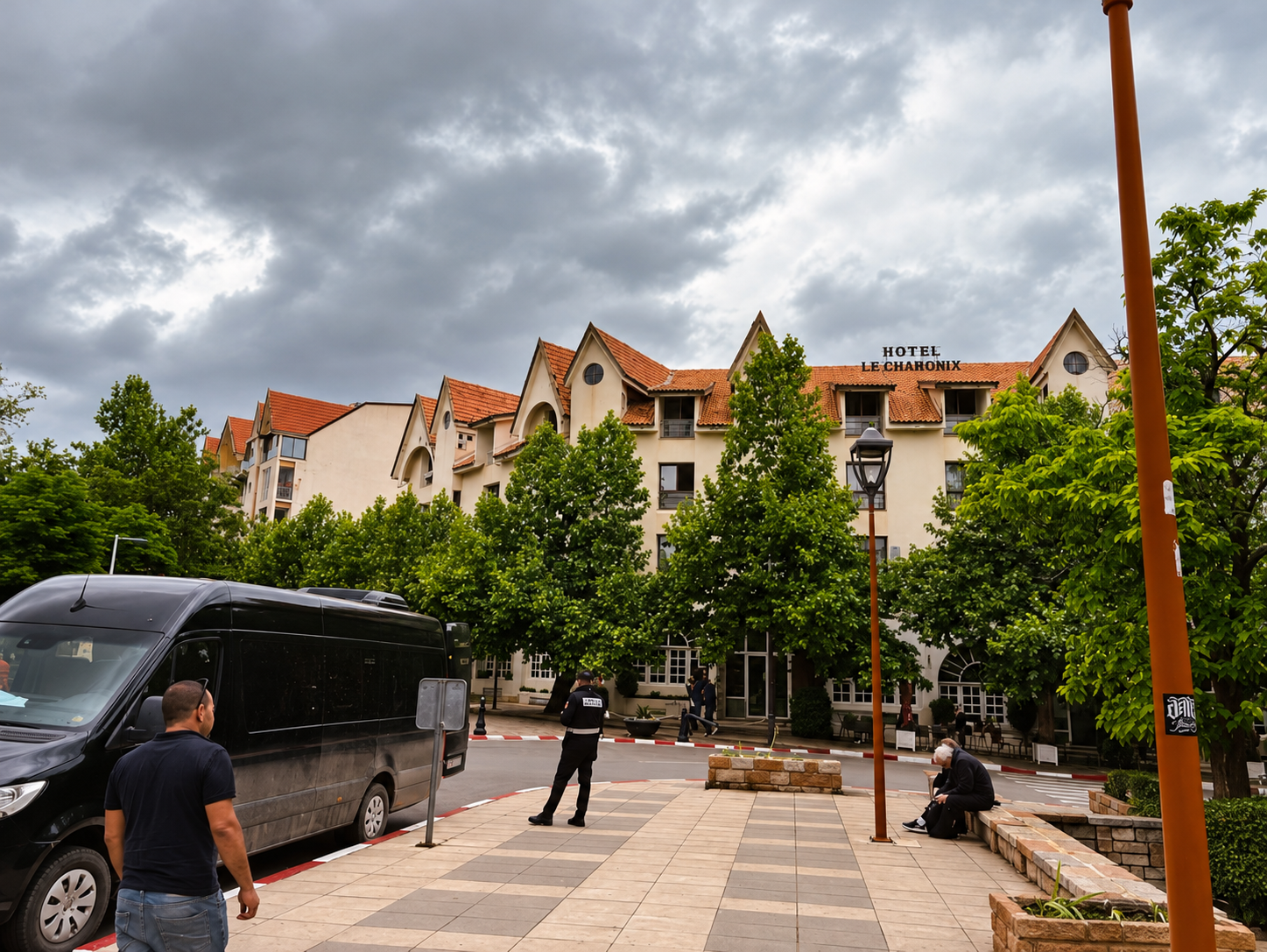
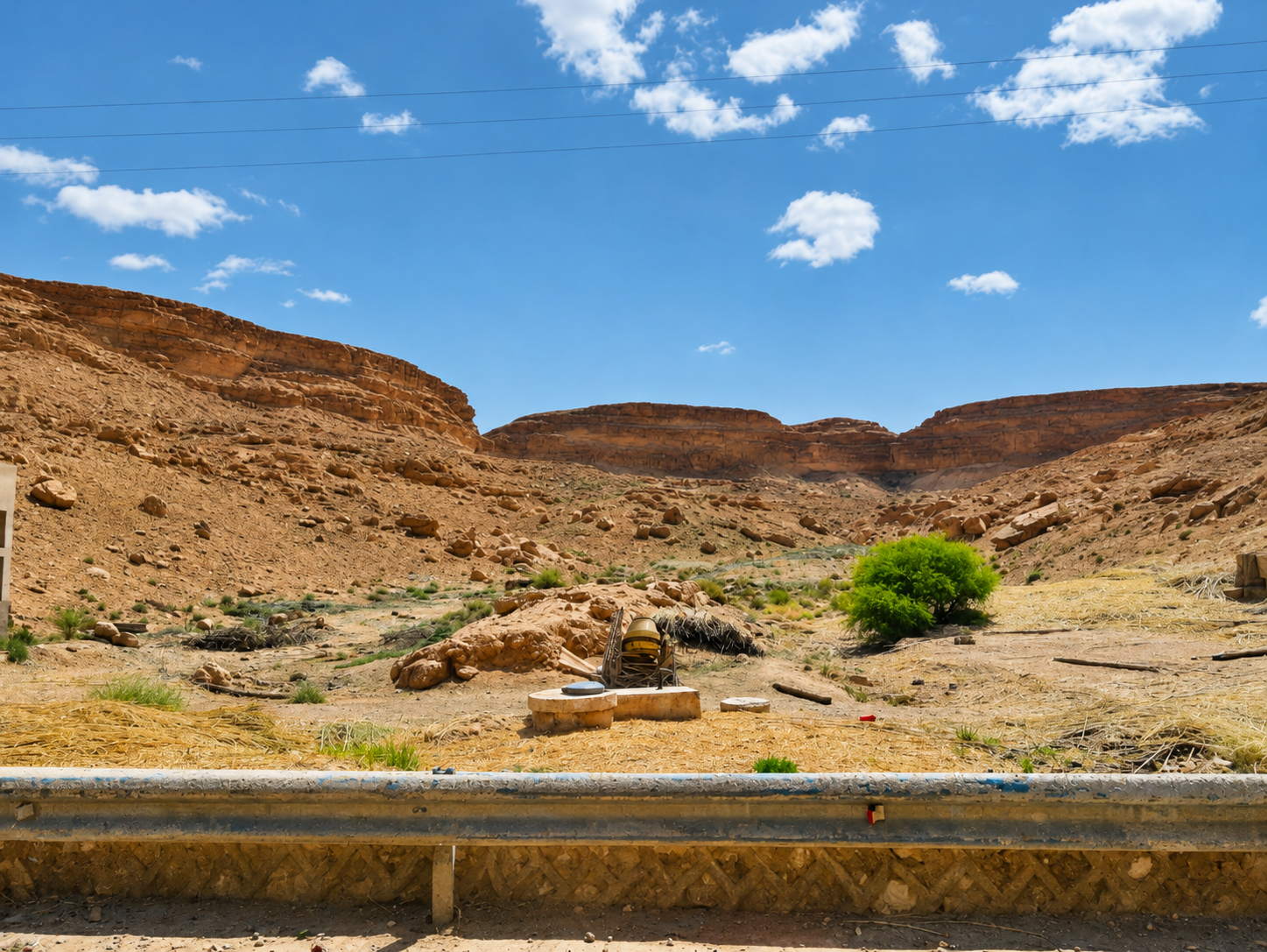
Merzouga, Erg Chebbi and the Atlas route
Merzouga is a village at the edge of the Sahara in eastern Morocco, associated with the dunes of Erg Chebbi. You will see both names when comparing desert trips: Merzouga helps locate the destination, while Erg Chebbi names the dune landscape. The Moroccan National Tourism Office’s regional guide describes the area’s dunes, palm groves and desert excursions.
The change of scenery on the way is part of the point. Ifrane sits around 1,650 metres high in the Atlas, with cedar forests in the surrounding Middle Atlas landscape. That mountain setting helps explain why the rooftops and greenery in our photographs look so different from the sand later on. Our brief stops were a glimpse of the region, not enough time to explore its walking routes.
When comparing tours, look beyond the word “Sahara” in the title. Read the actual destination, camp location and return city. A trip that brings you back to Fez fits this weekend; one that continues elsewhere needs a different plan.
Camel shadows across the Sahara
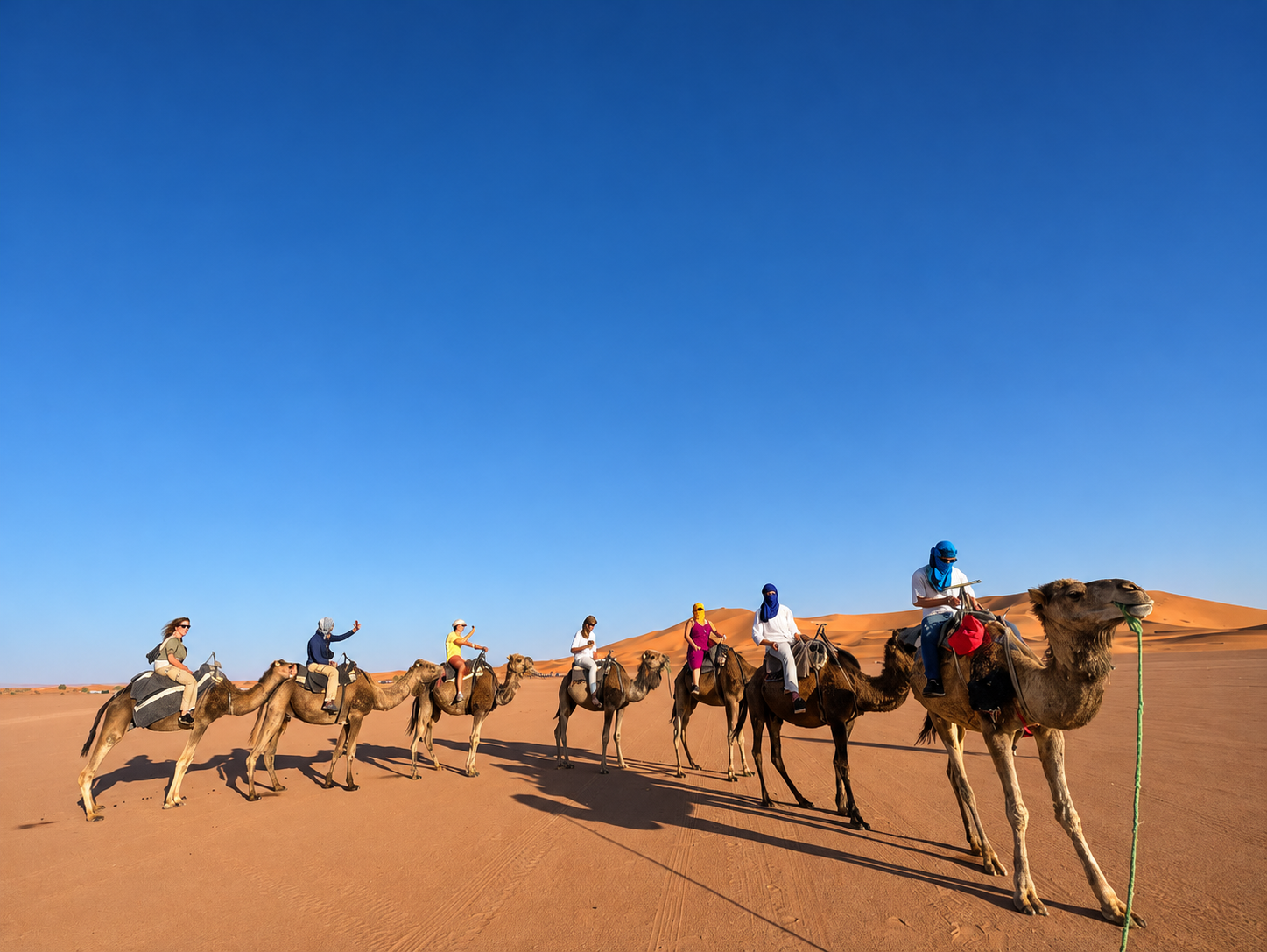
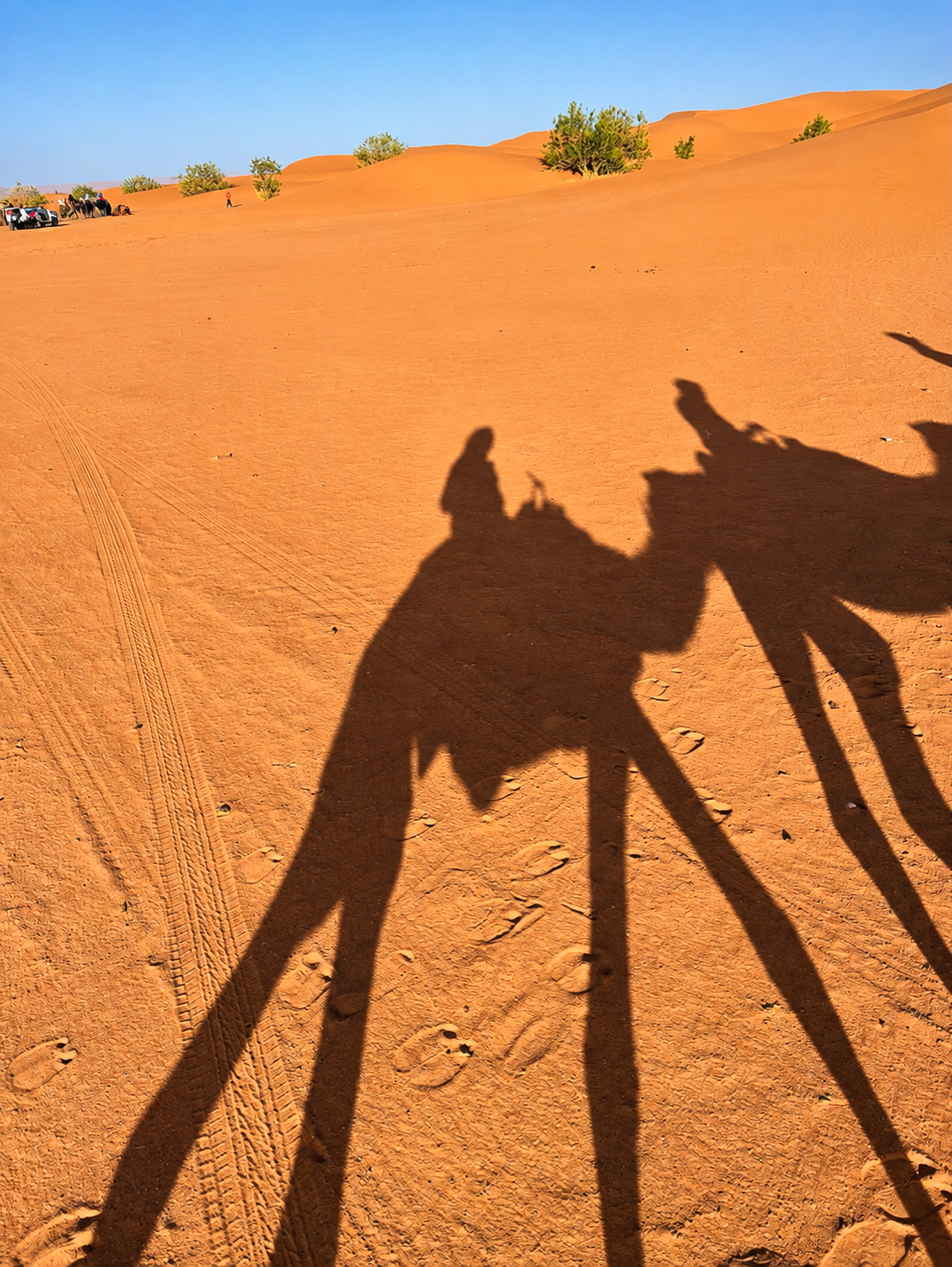
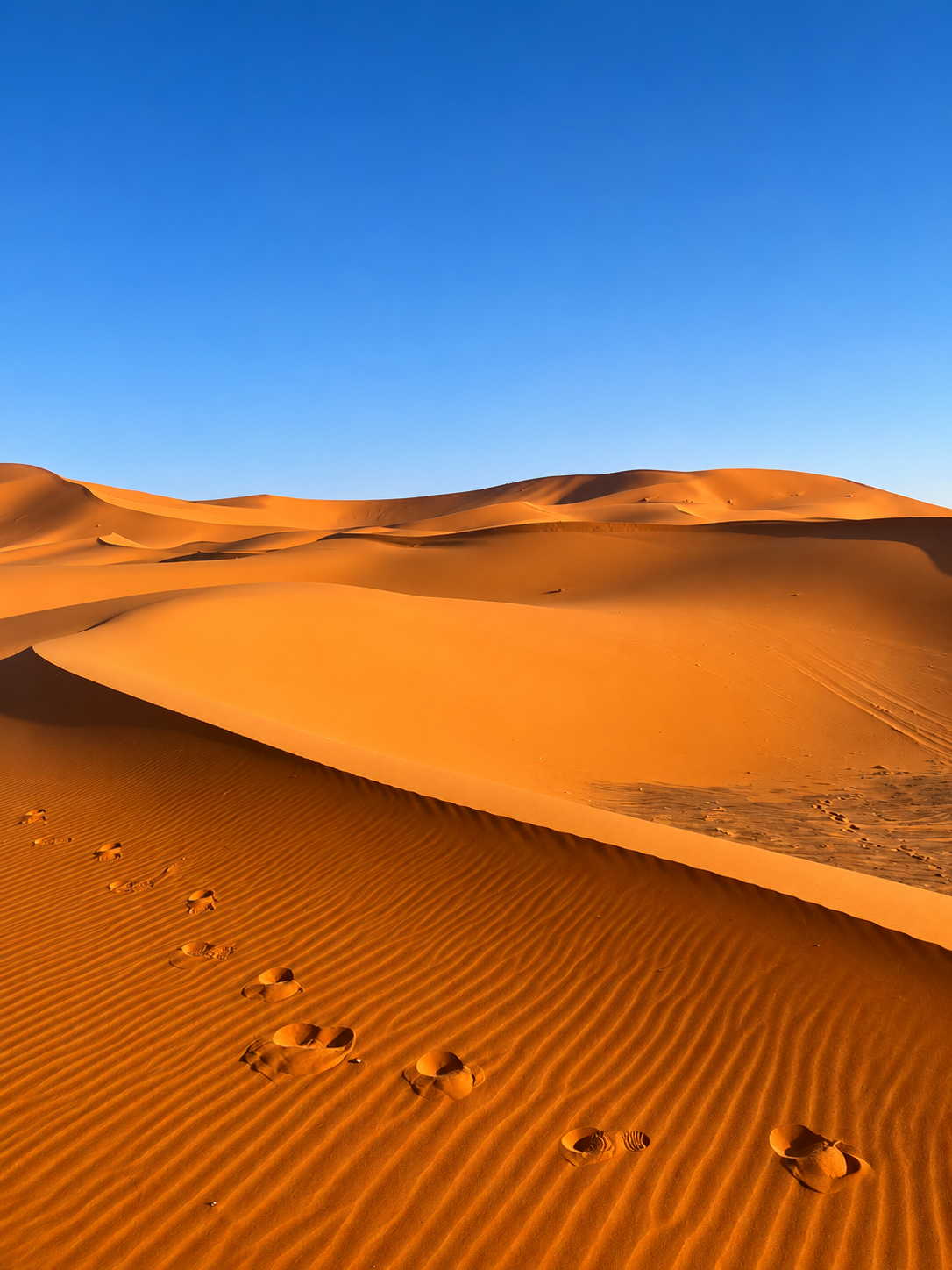
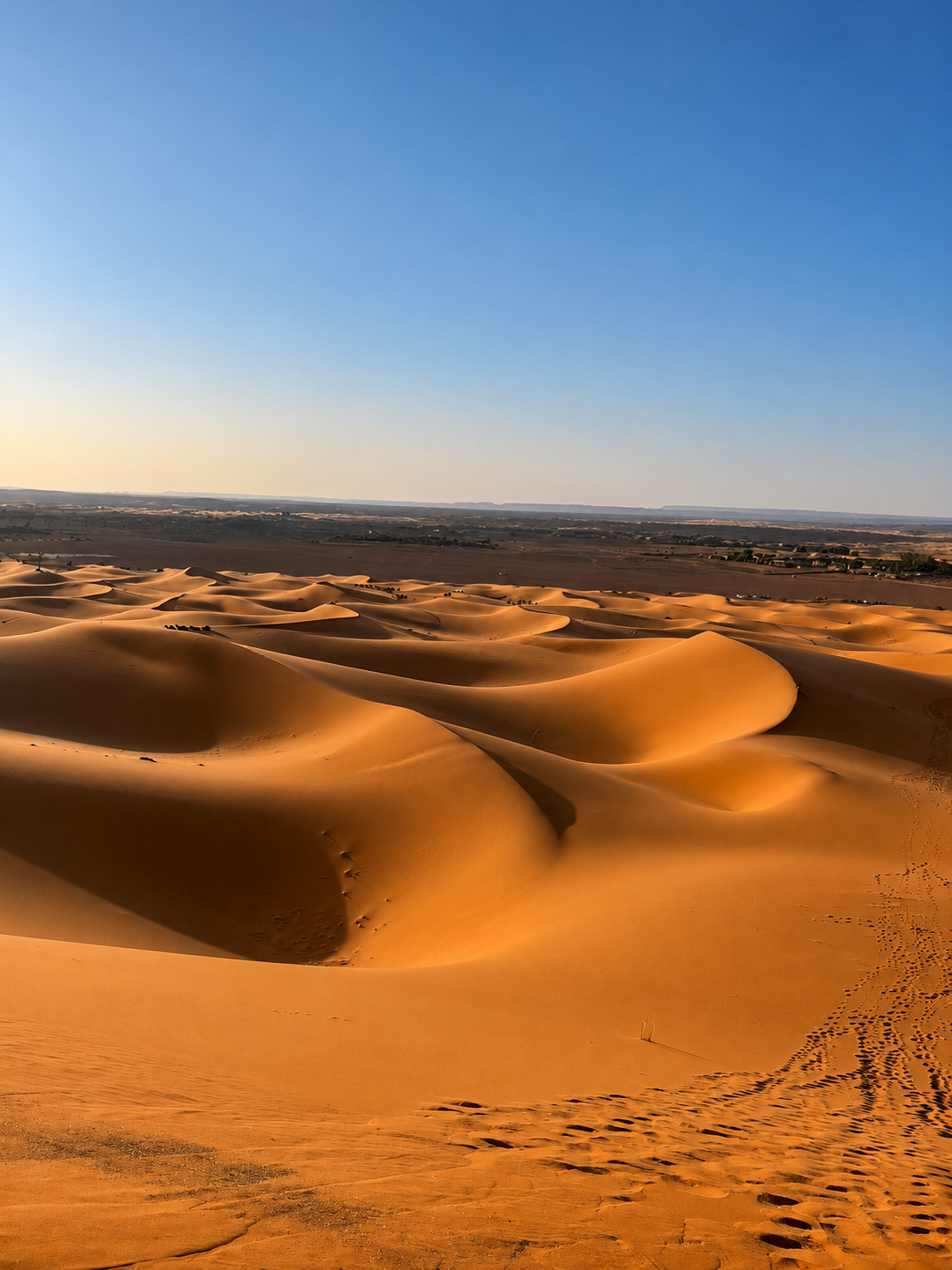
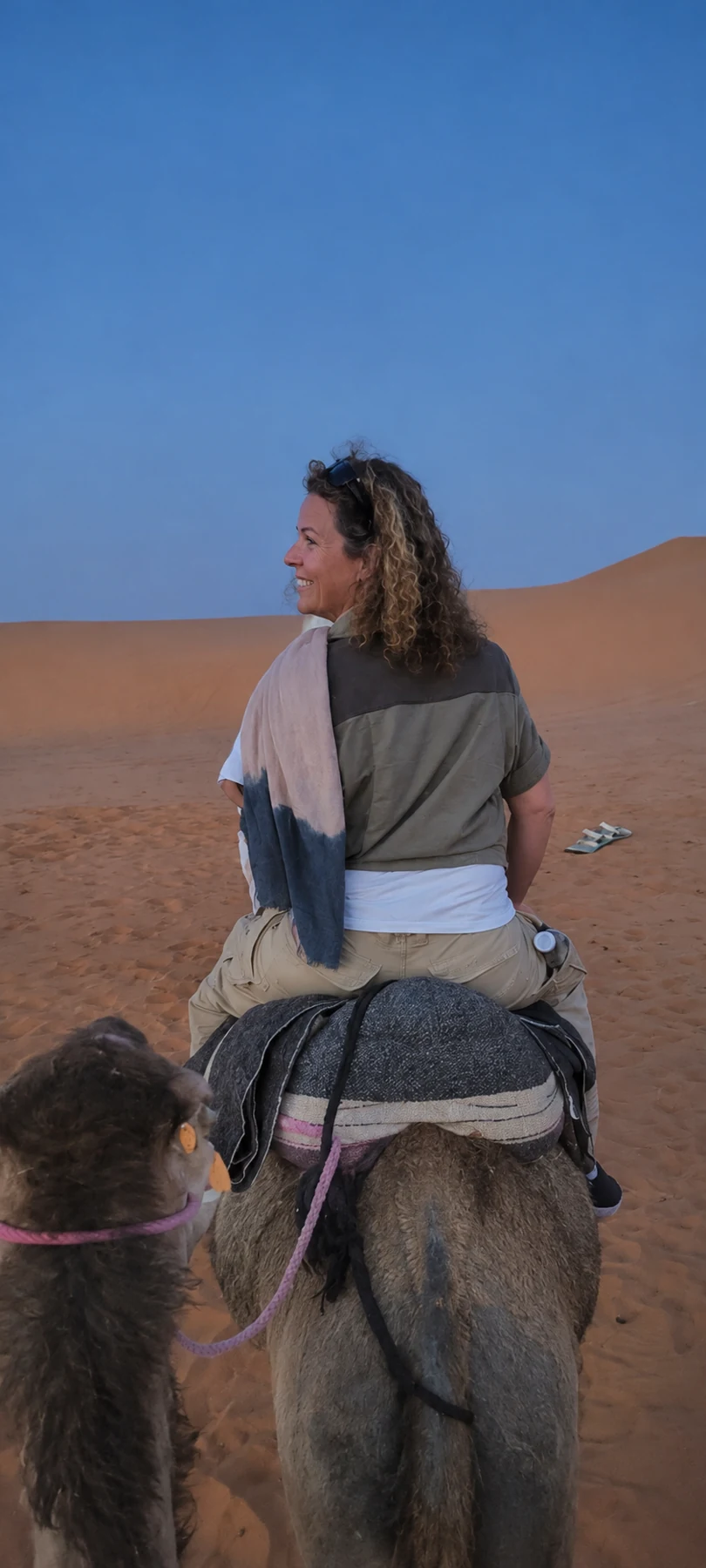
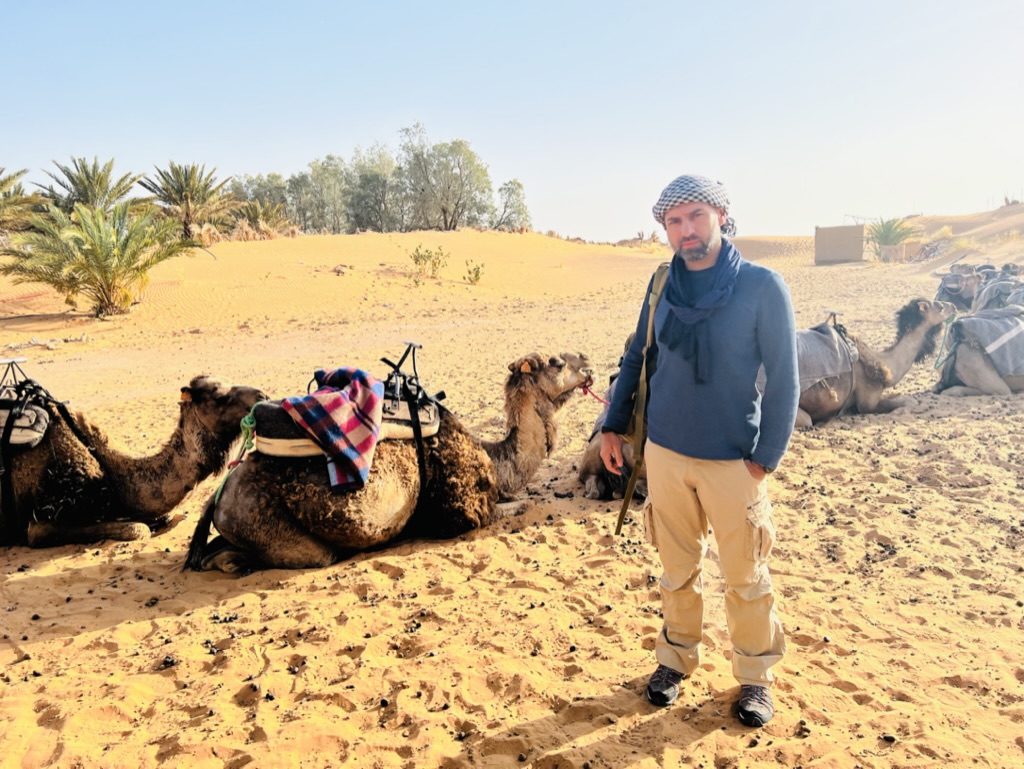
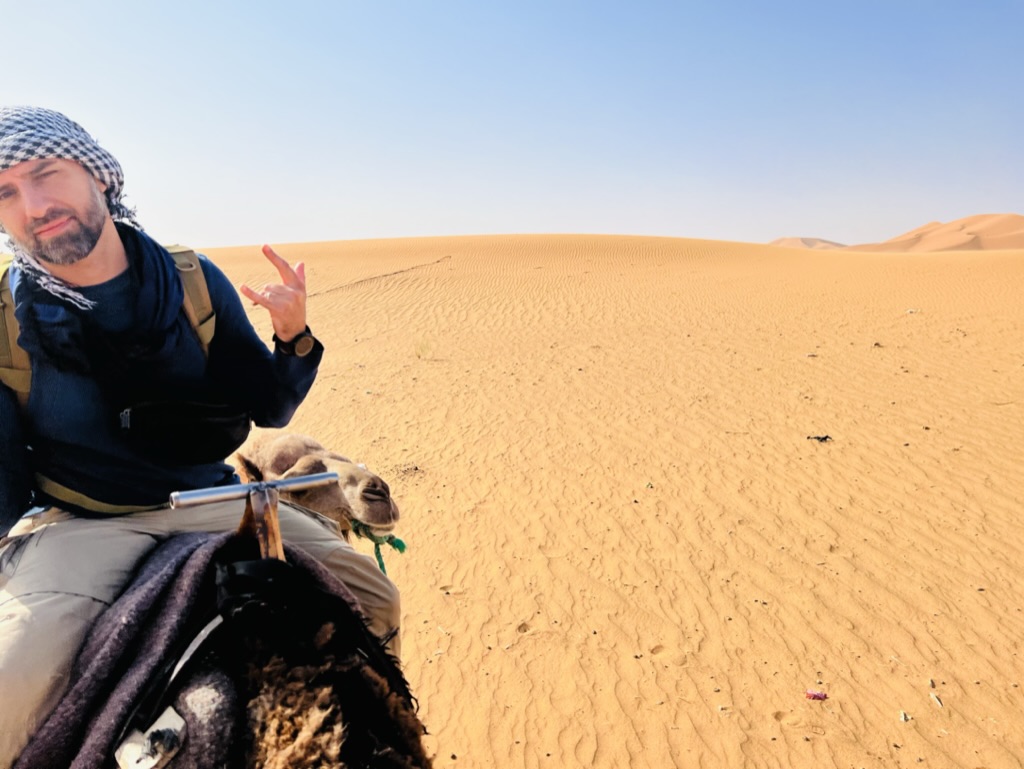
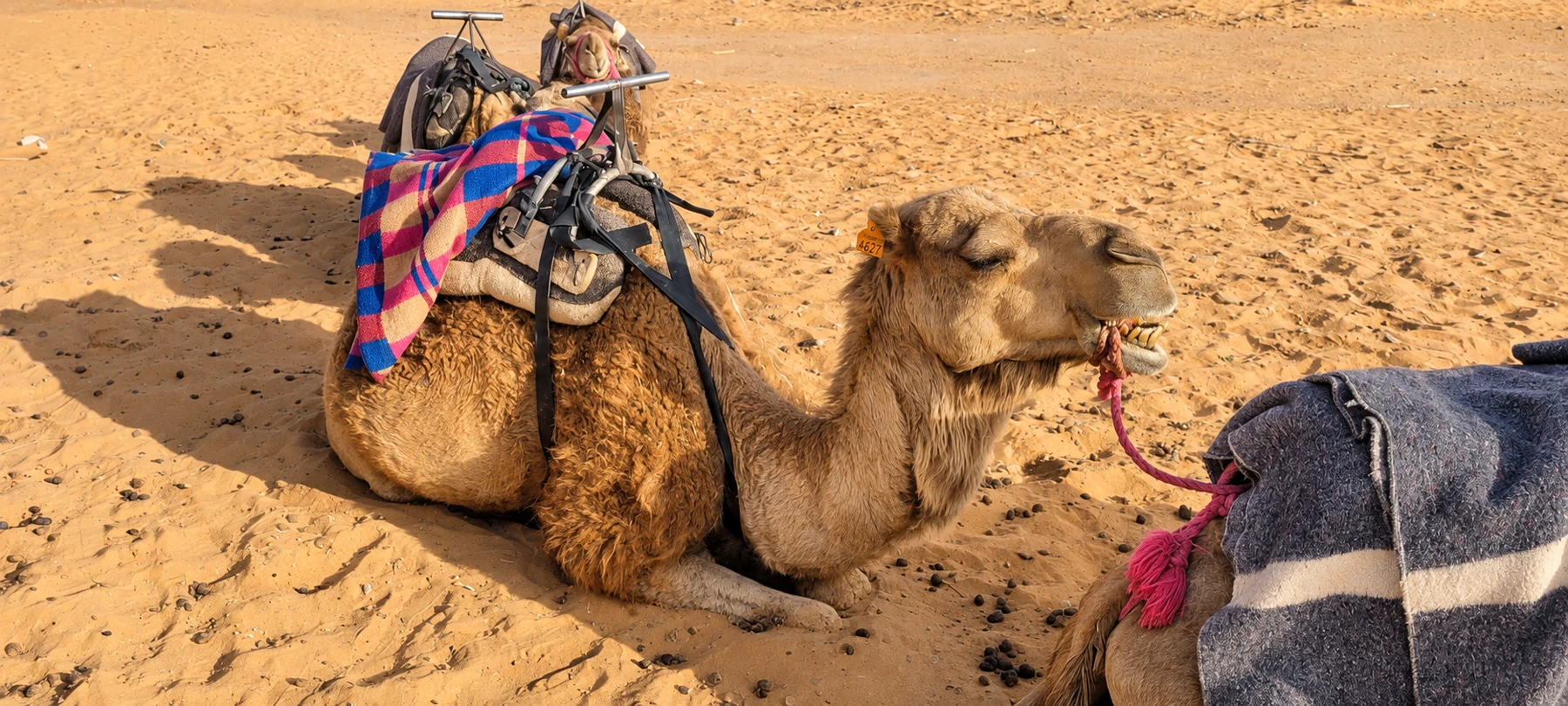
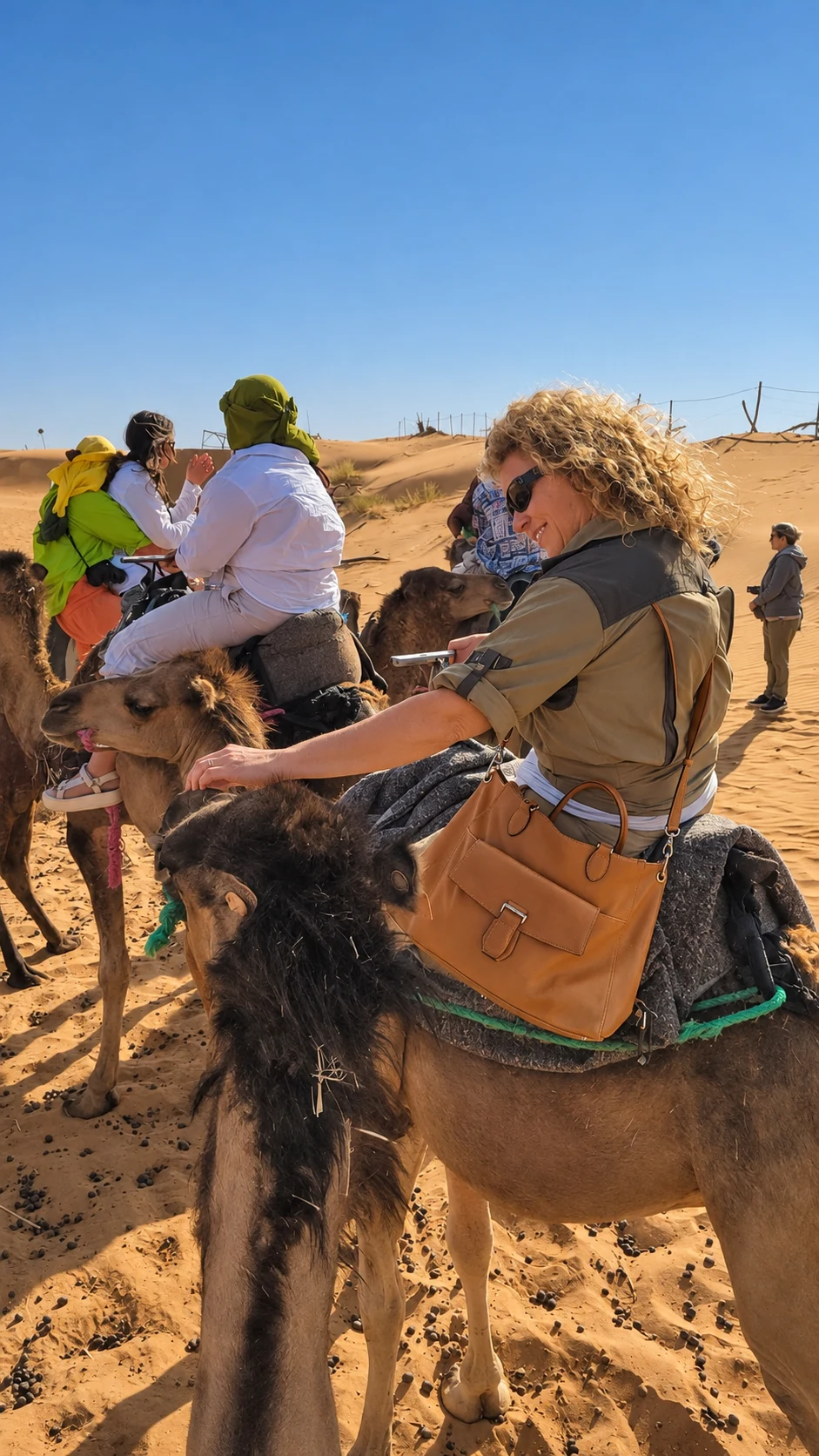
After hours in the van, being out among the camels felt like the start of a different trip. By Saturday evening we were riding into the dunes, with orange sand ahead and impossibly long shadows beside us. Every neck, leg and rider had become part of a moving drawing on the ground.
Getting on and off a camel, then walking on loose sand, is a good argument for shoes you already trust. I brought my LOWA Renegades; Miguel wore his Merrell hiking shoes. The same shoes and clothes took us from the road to the dunes and back to the city. Familiar and comfortable mattered much more than bringing a different outfit for every stop.
Once we were out there, the luggage and the long drive stopped being the interesting part. There was just the caravan, the changing shapes of the dunes and the pleasure of finally being where we had hoped to go.
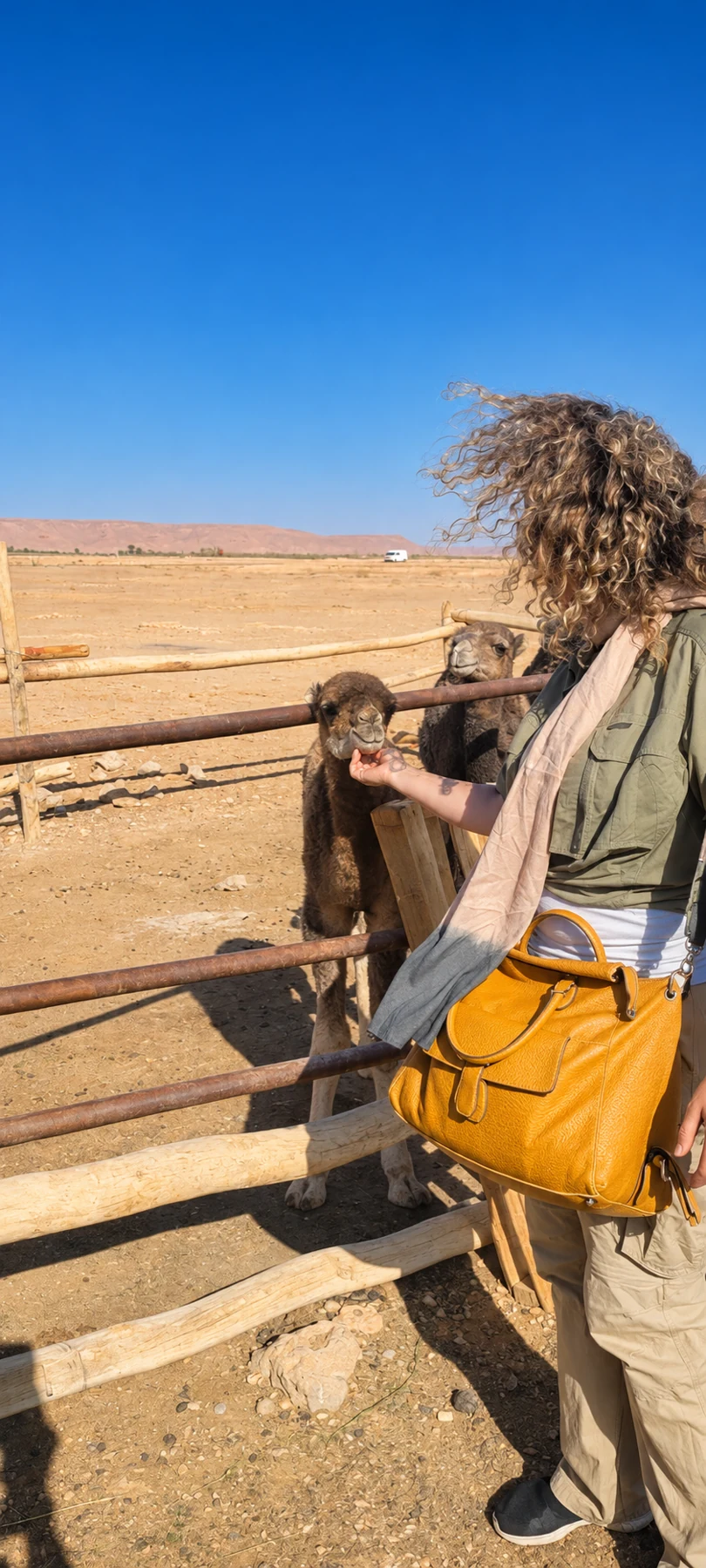
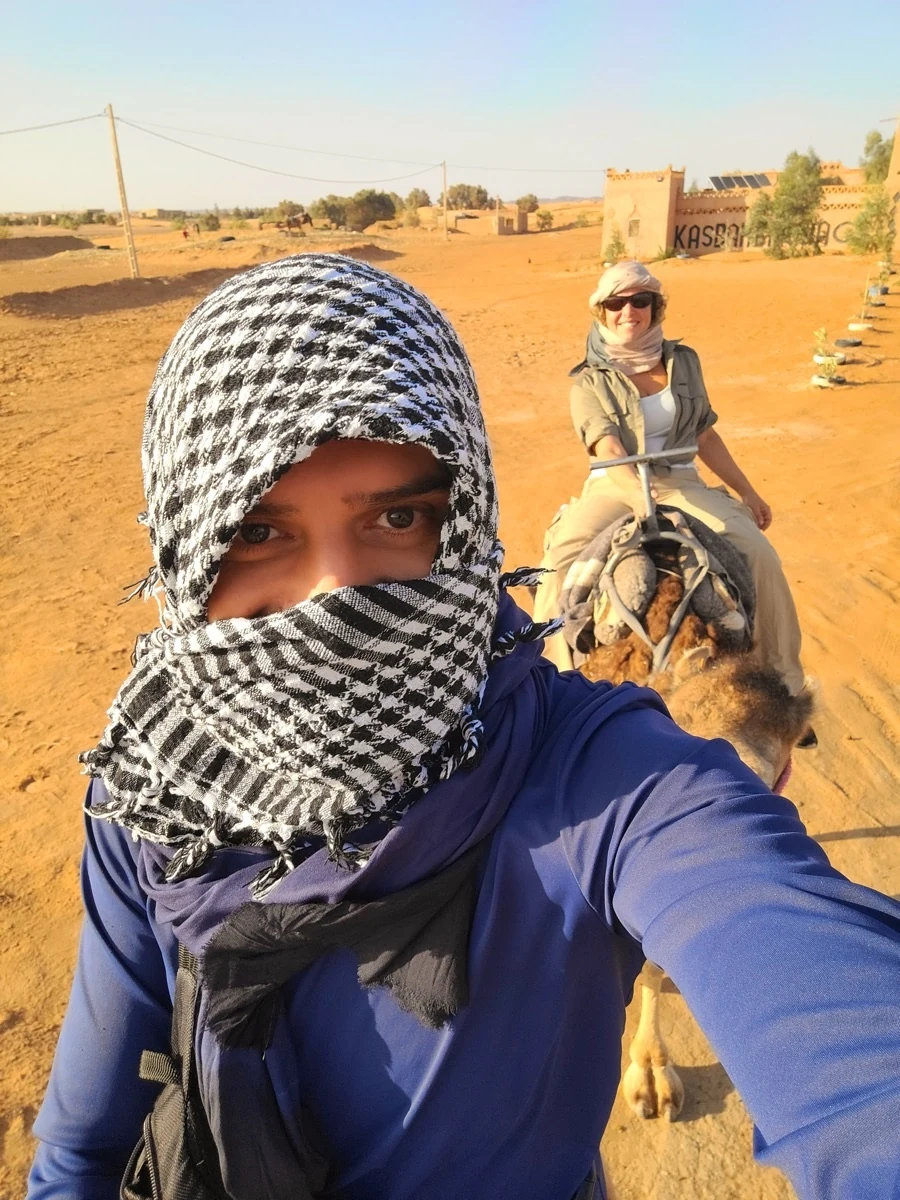
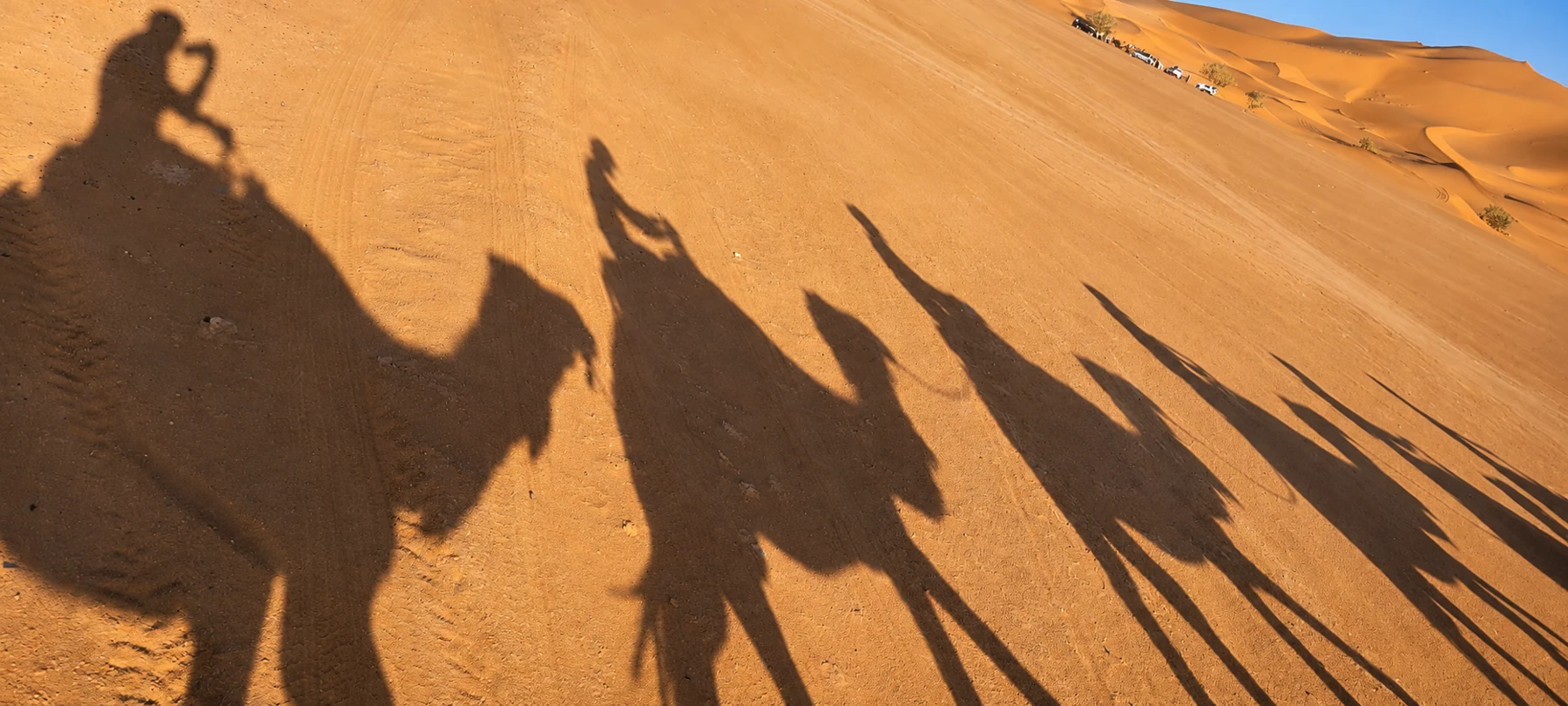
Camels, shadows and the first dunes 4 photos
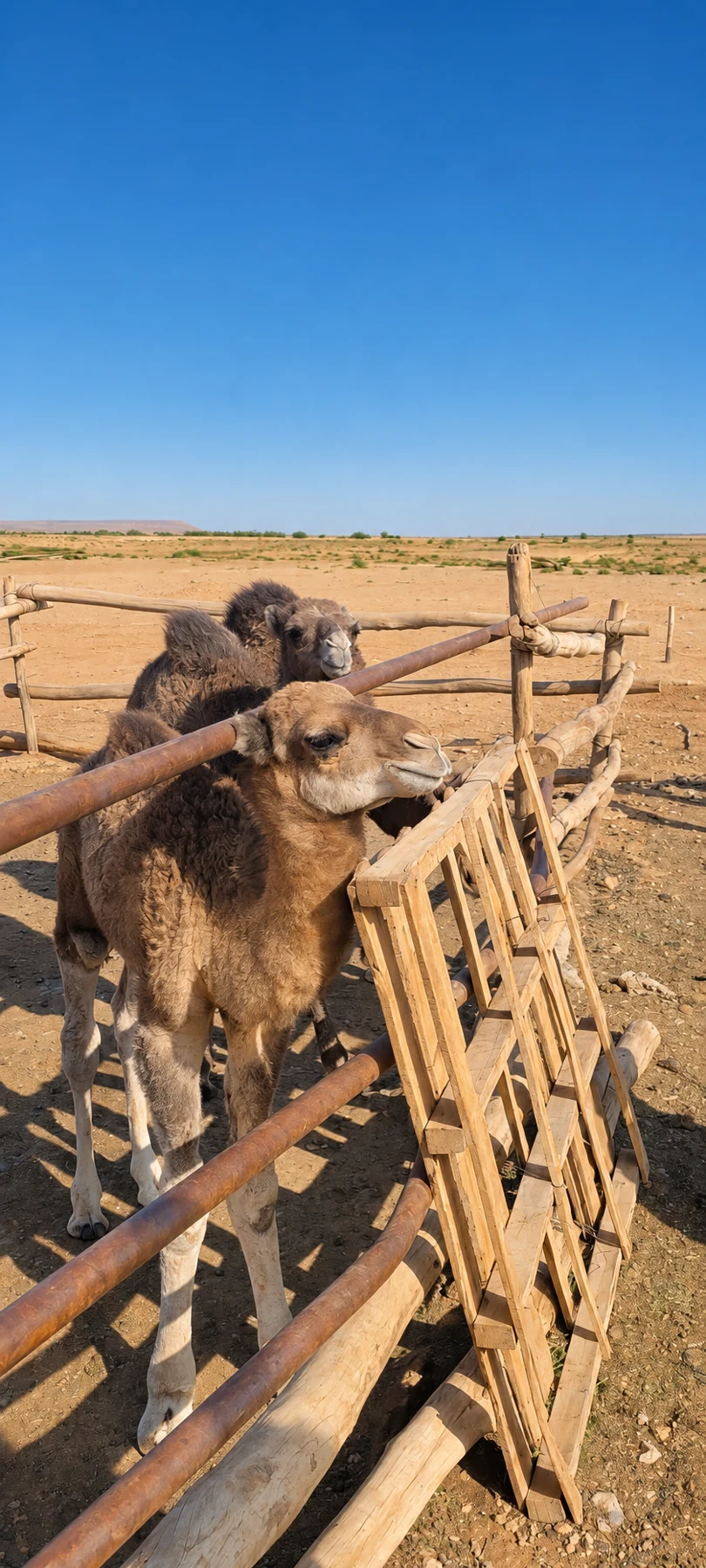
Stay for the changing light
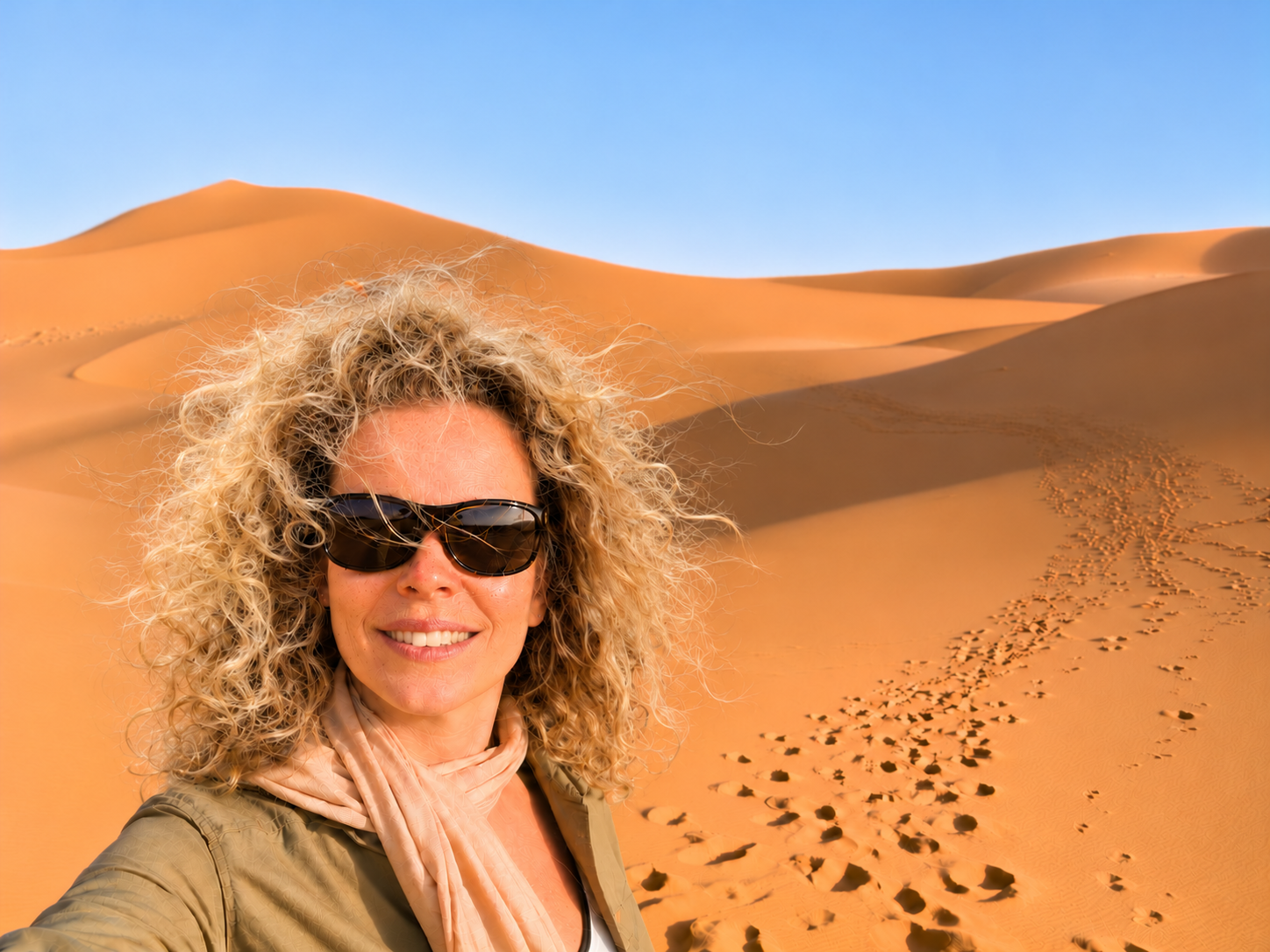
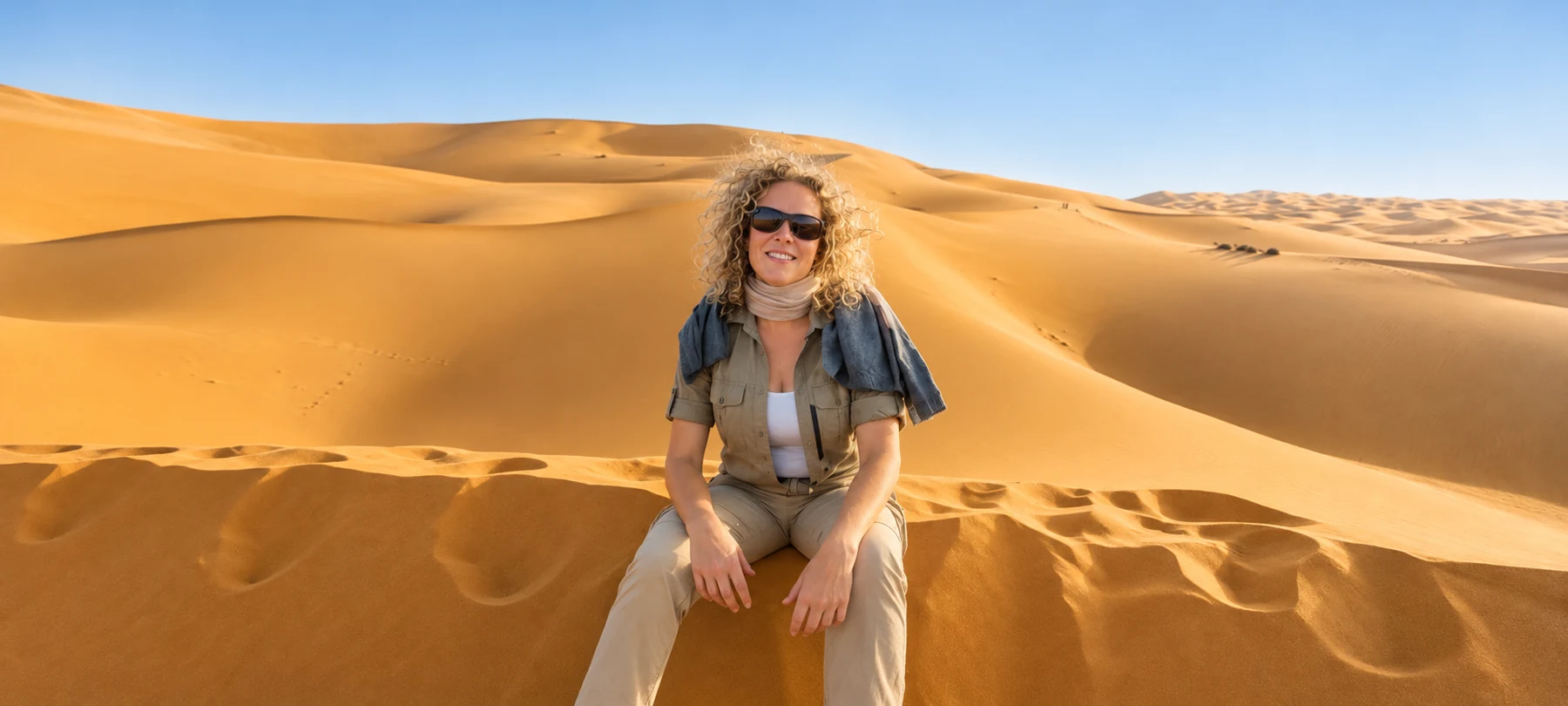
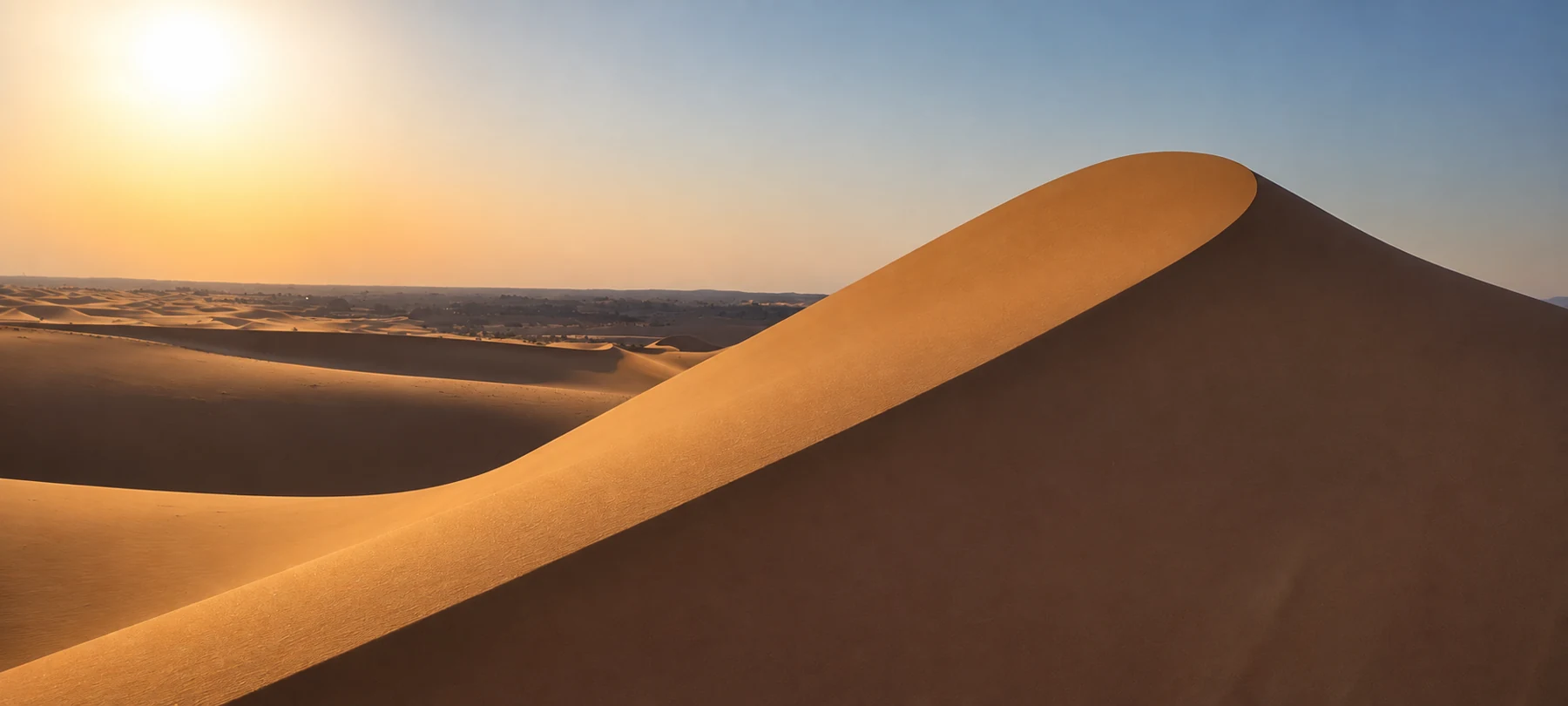
The sand was still bright when we arrived. Sunglasses on, scarf wrapped, I was glad of my Serengetis in that strong desert sun.
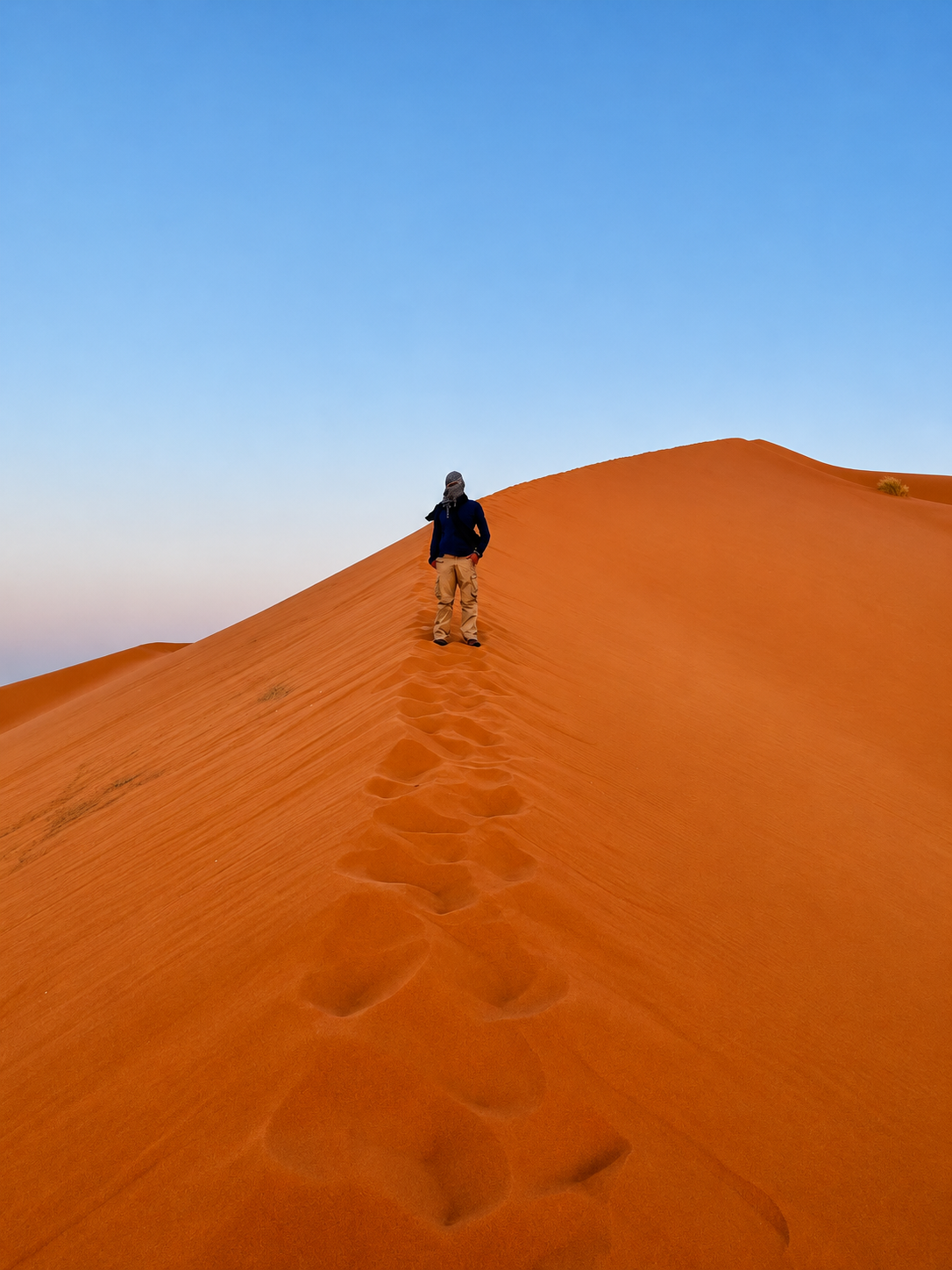
We climbed one of the dunes to watch the sunset, which sounded much easier than it turned out to be. From below, it did not even look that high. But every time I stepped up, the sand gave way and I slid back almost as far as I had climbed. Getting to the top seemed to take forever, and it was exhausting. Those lovely smooth slopes make you work for the view.
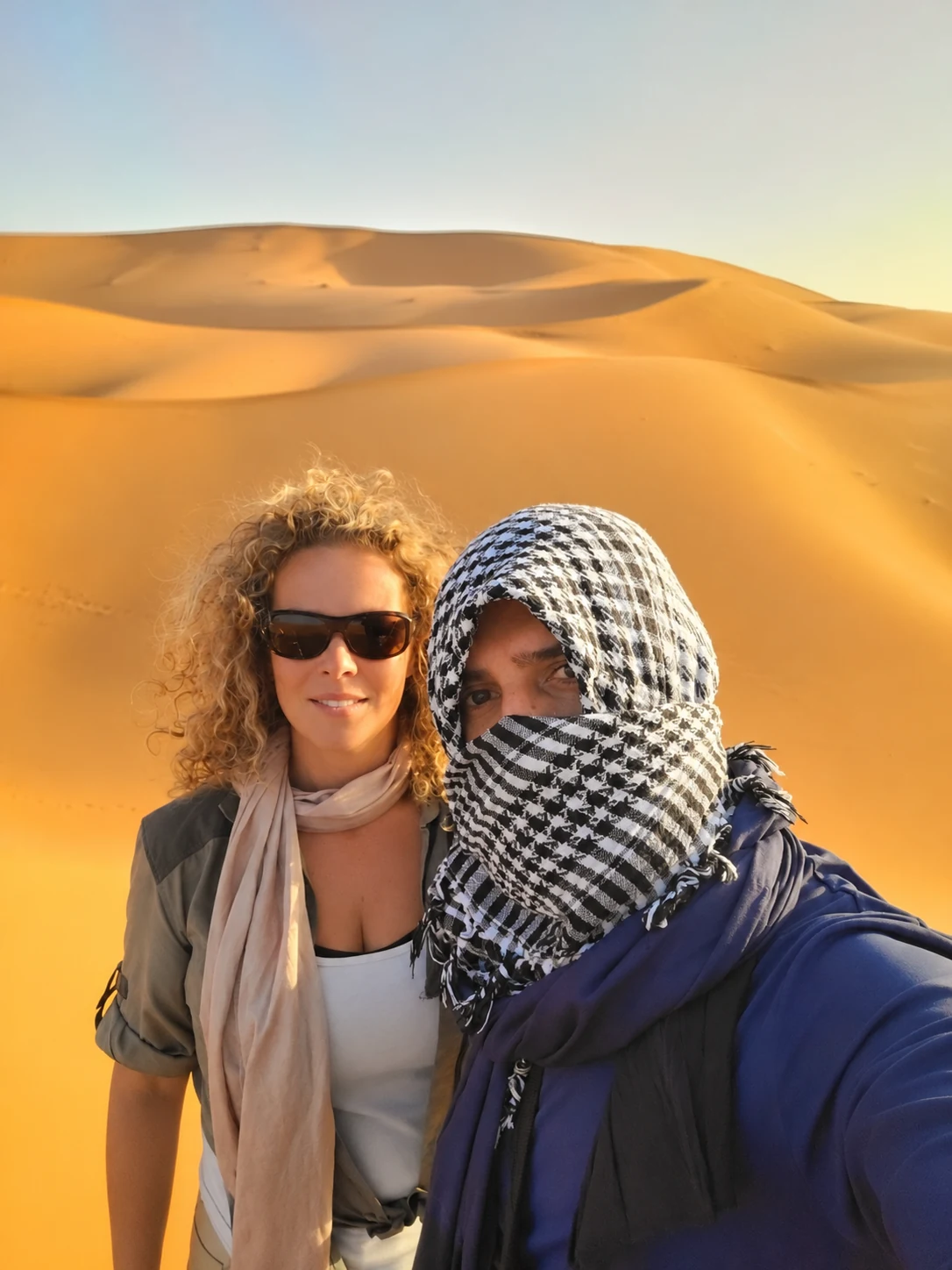
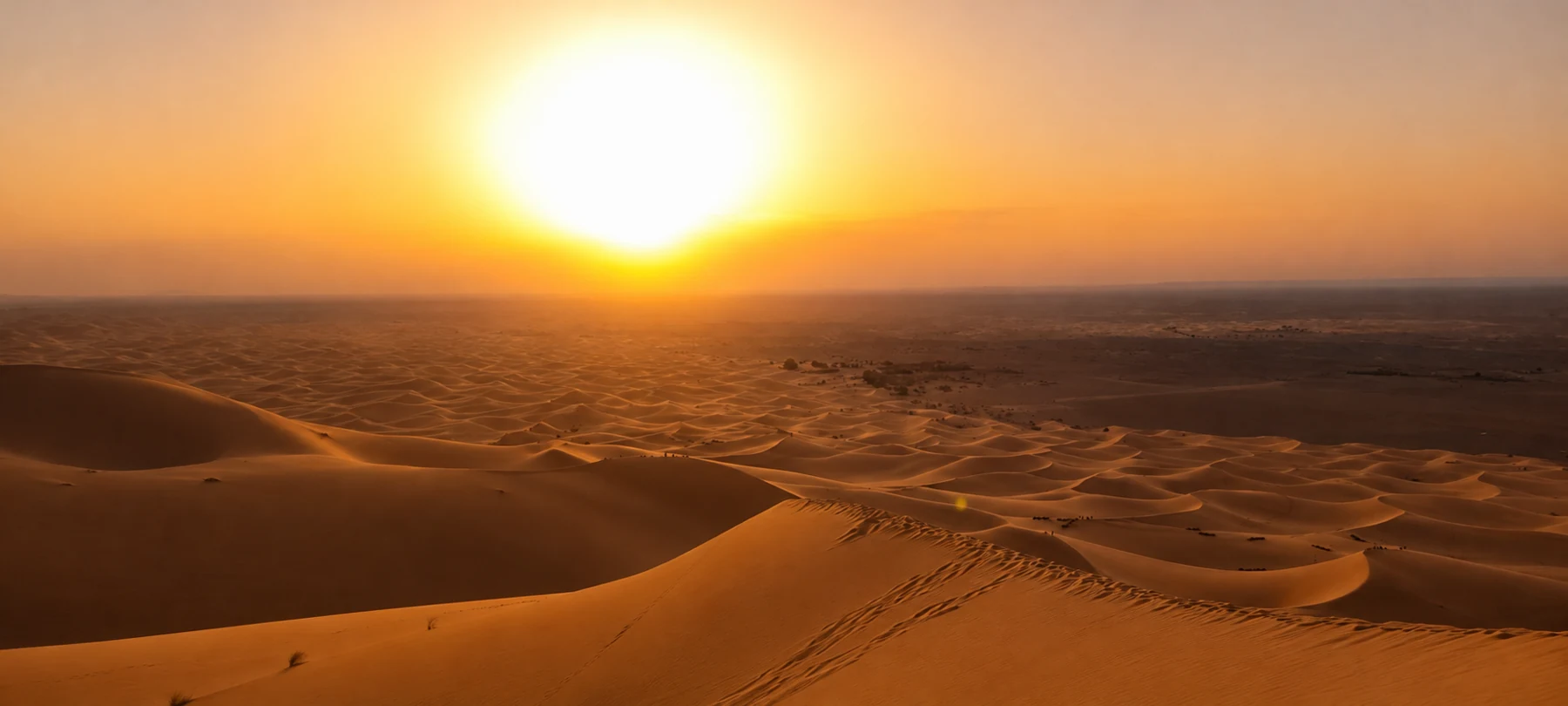
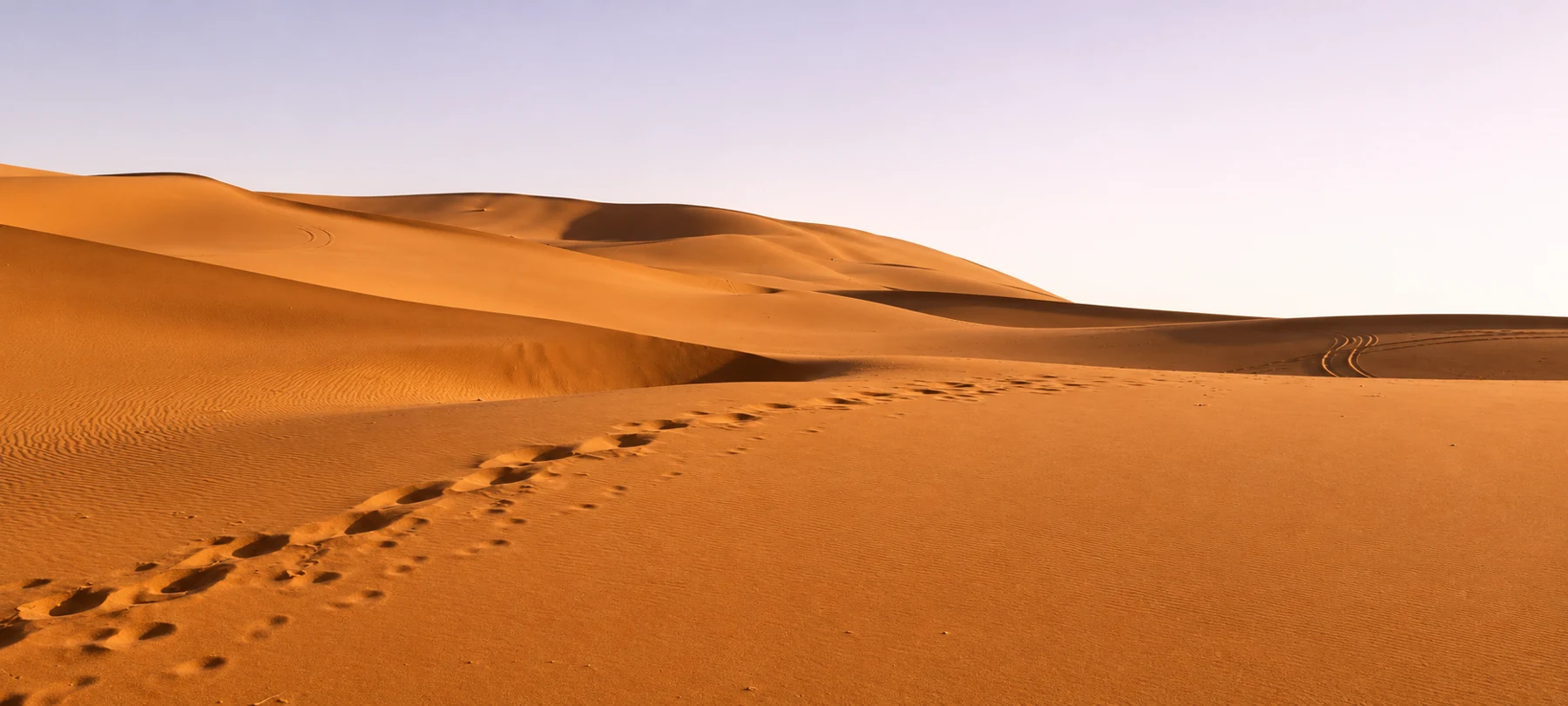
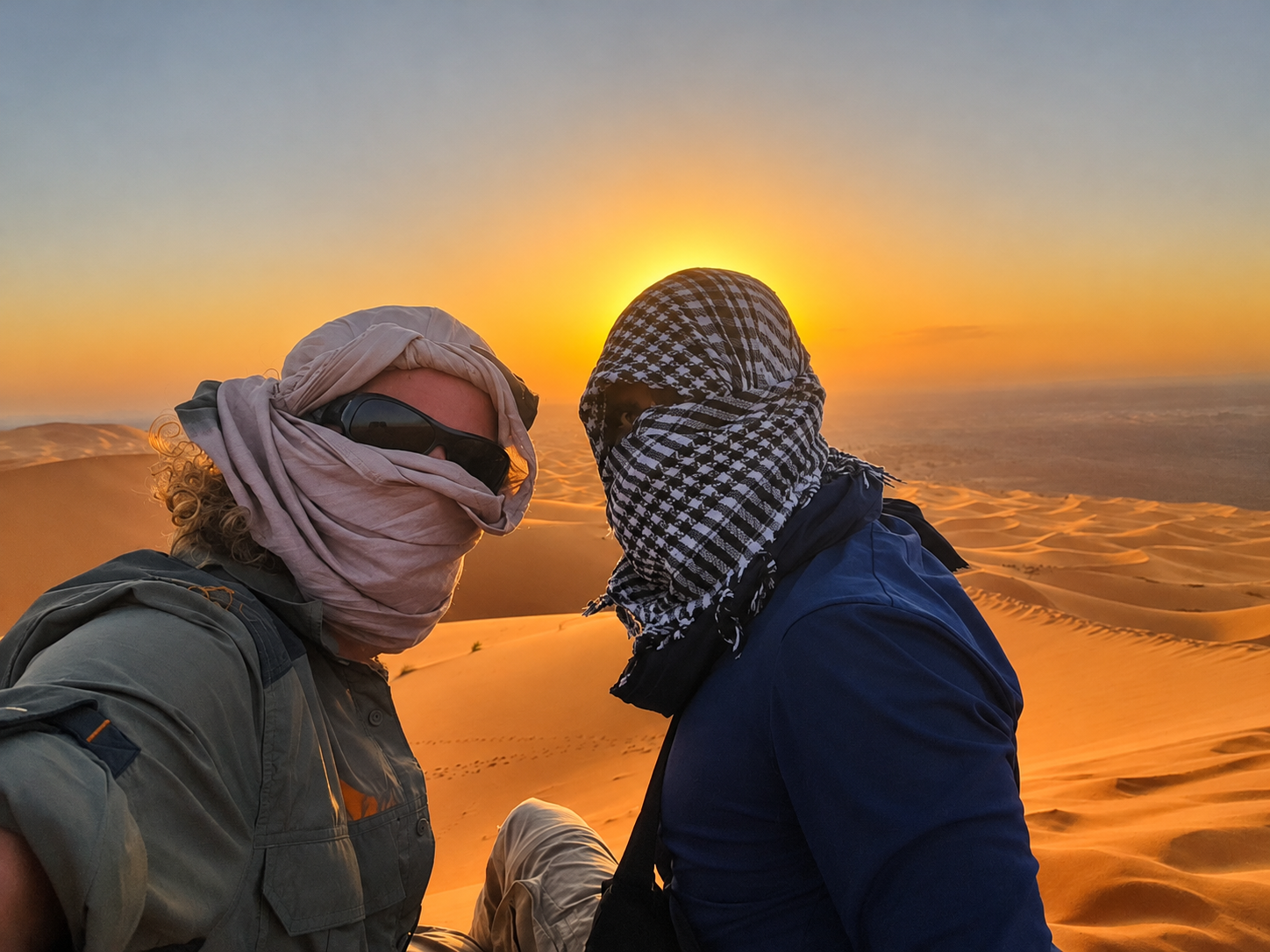
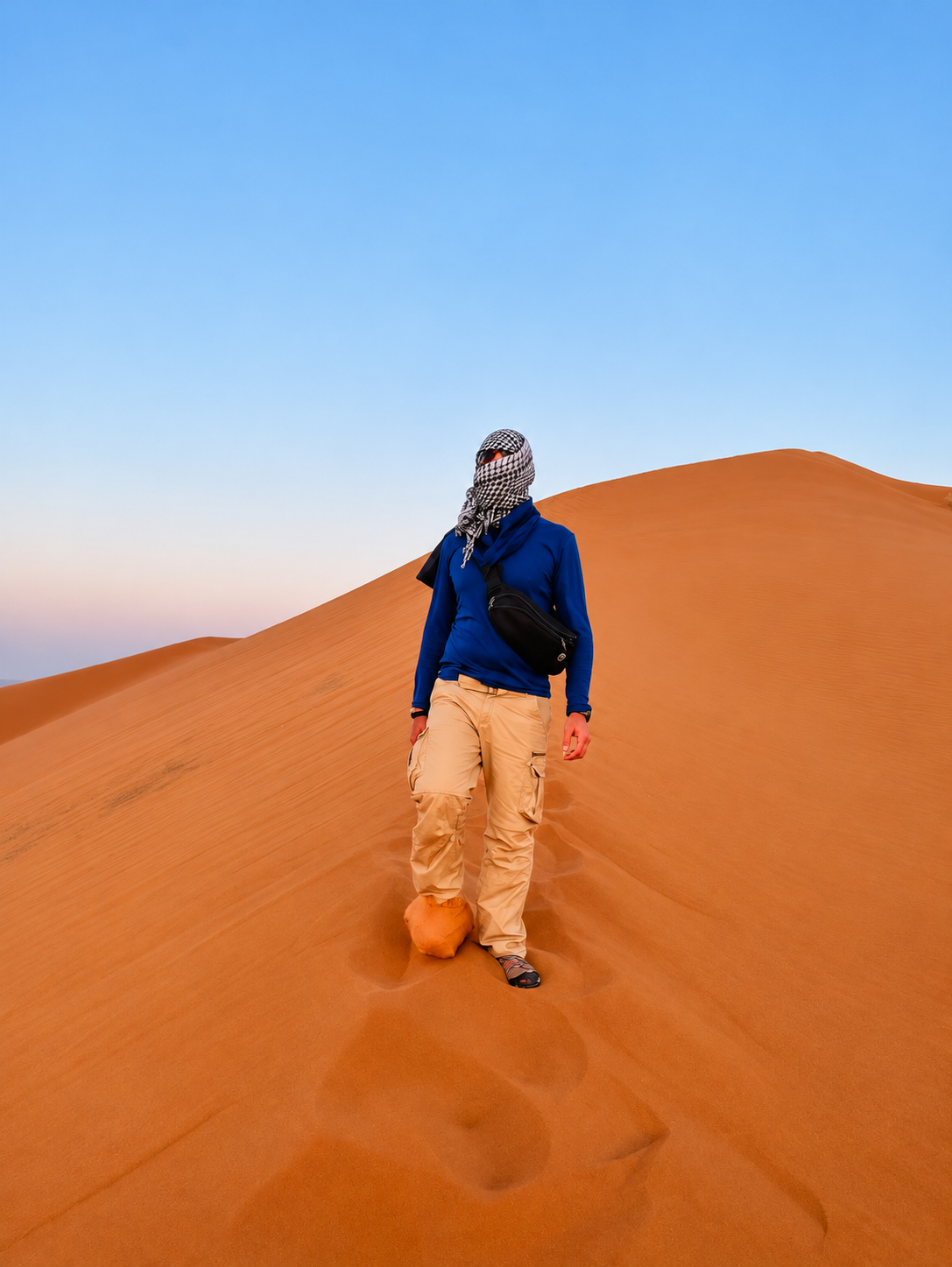
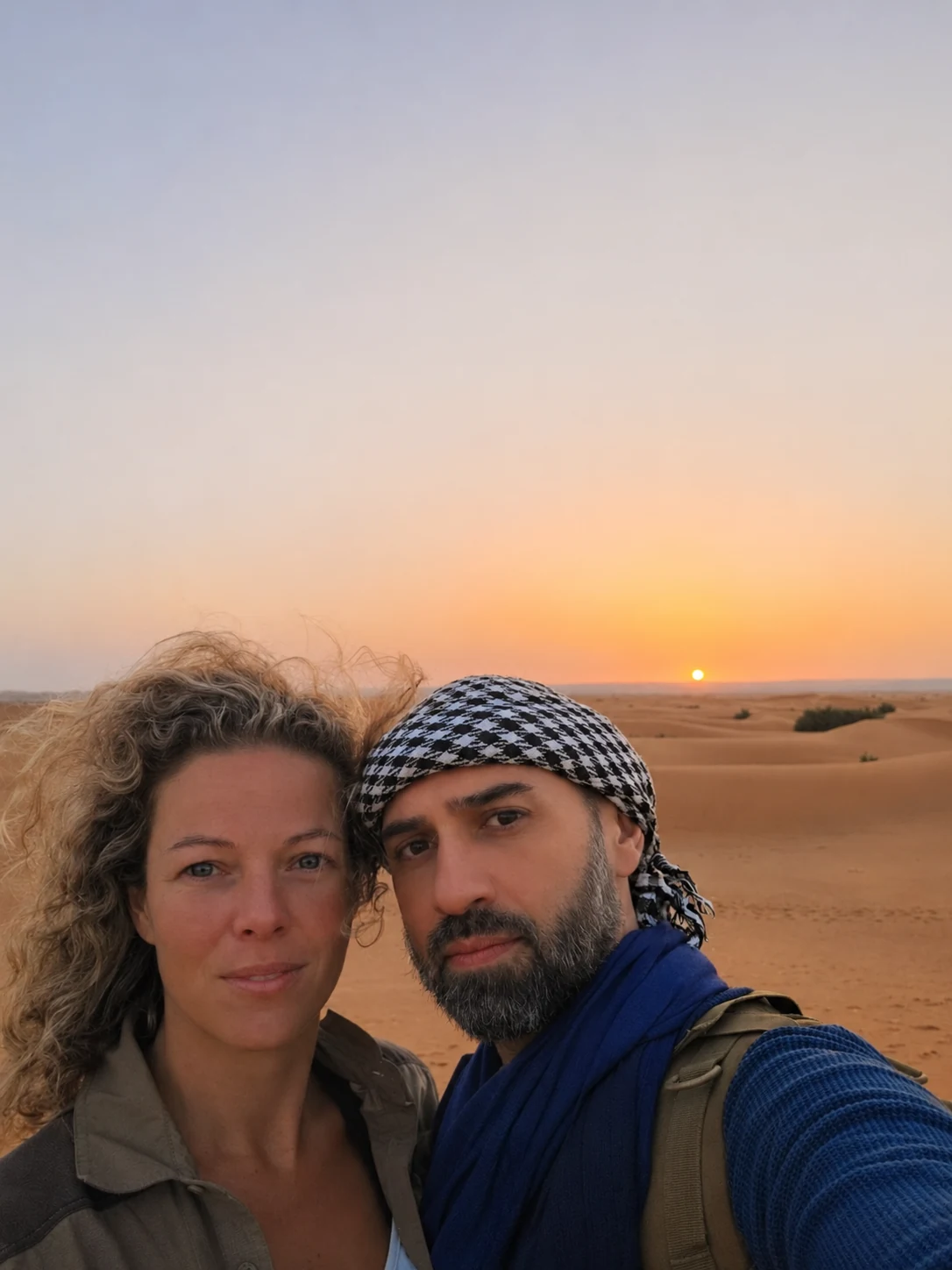
As the sun dropped, shadows deepened along the dunes. Miguel walked across a ridge, leaving footprints behind him, and we sat together with our scarves wrapped around our heads. We were a long way from the office phone call that had started all this. For a while there was nothing we needed to do except stay there and watch.
More from our evening on the dunes 6 photos
Sandboarding: the sand wins again
We tried sandboarding too. It looks wonderfully straightforward when somebody else is doing it. Staying upright yourself is another matter.
My attempt ended in a fall, which is the funny bit of the video below. Between climbing the dune and trying to come down it gracefully, I had developed quite a lot of respect for sand. At least the footage gives us something to laugh about afterwards.
A tent with a proper bed
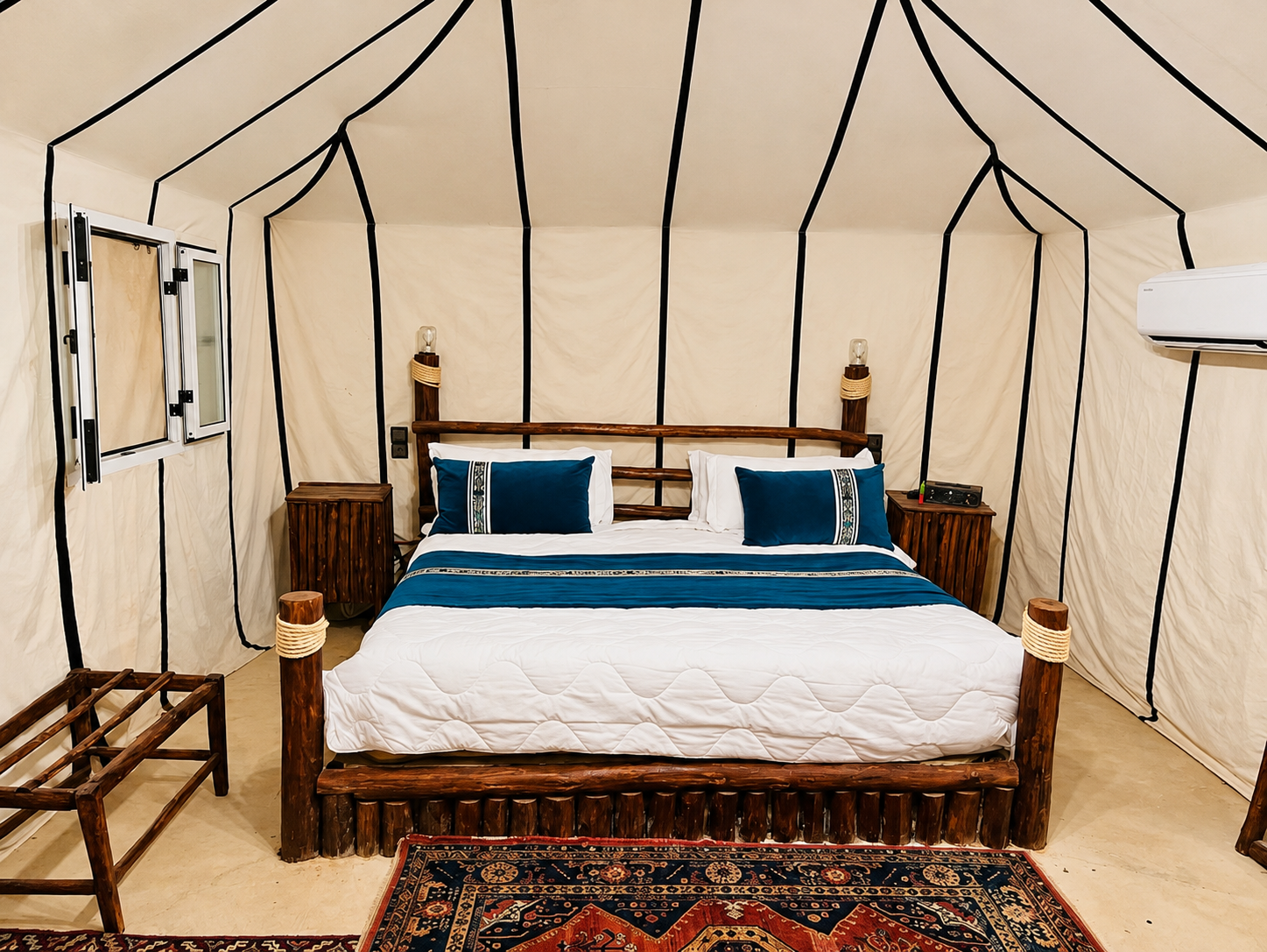
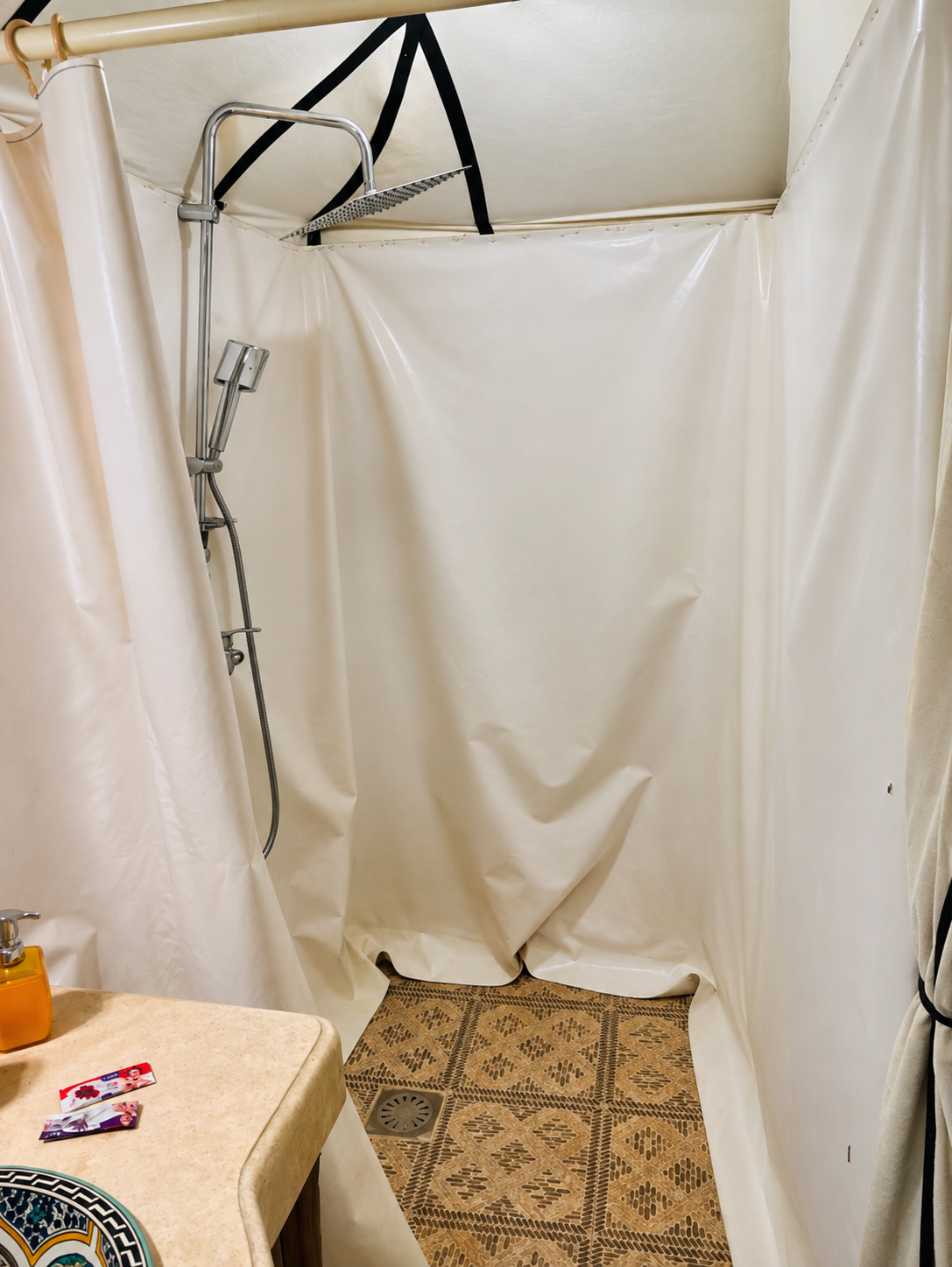
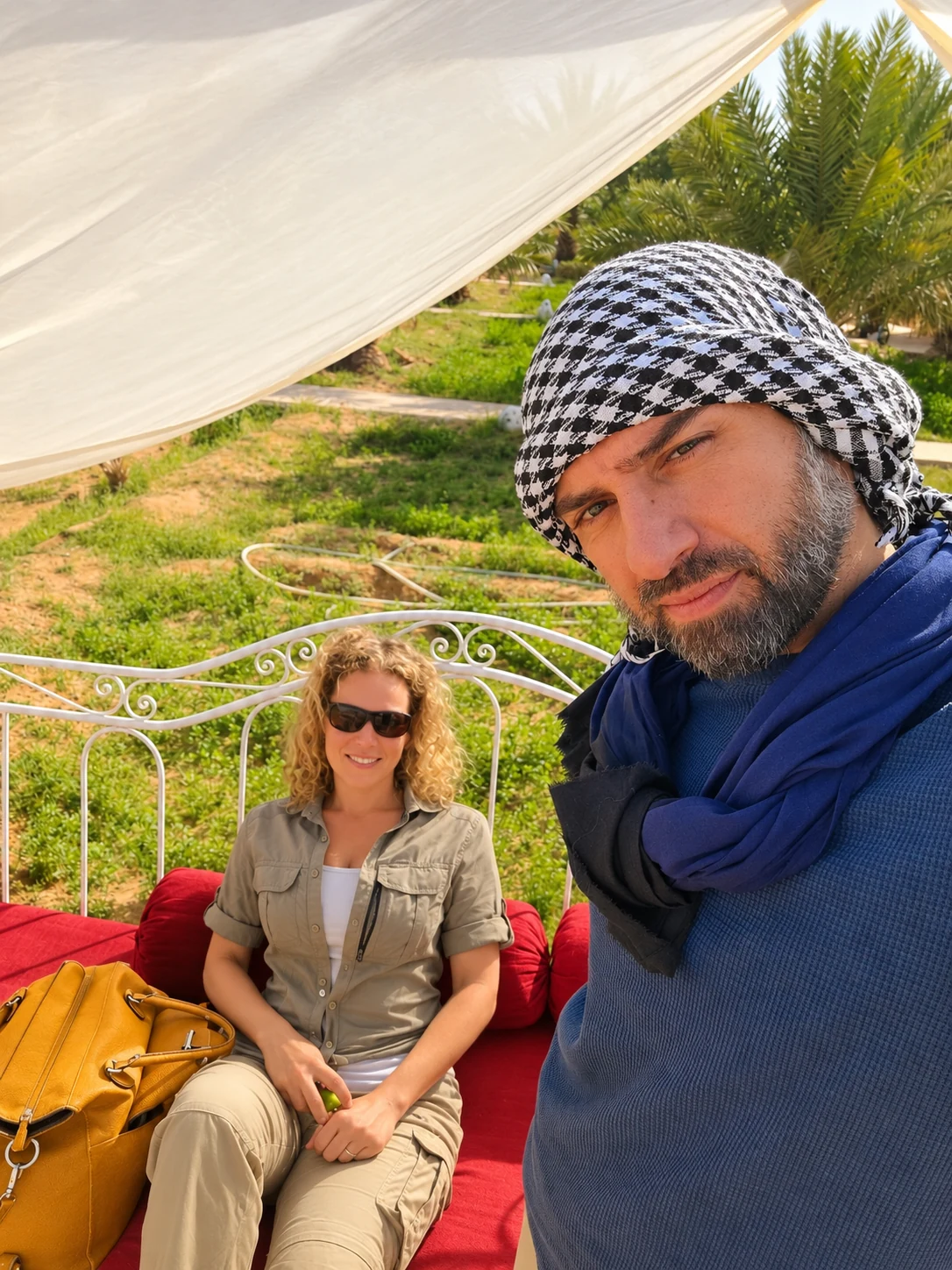
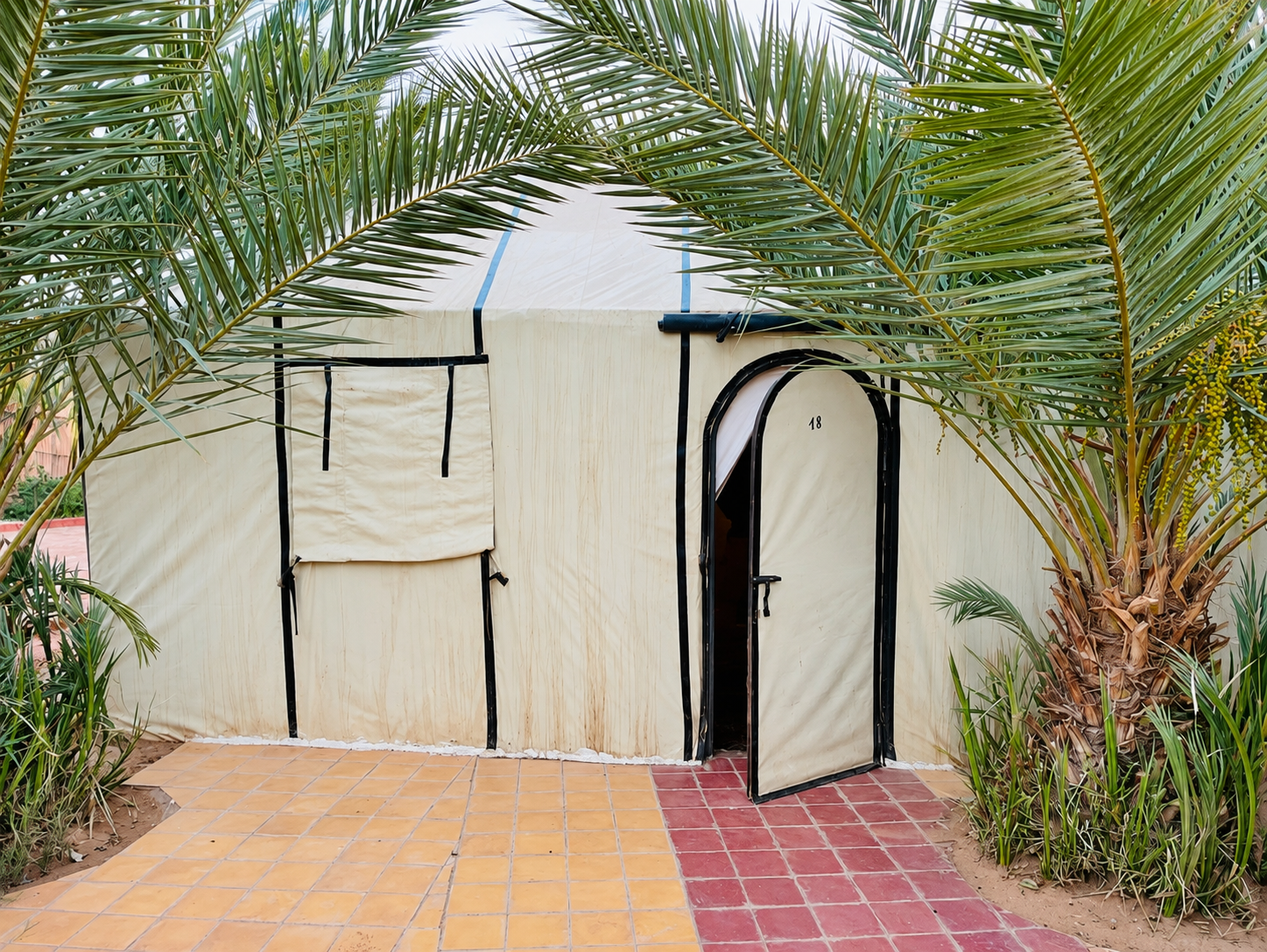
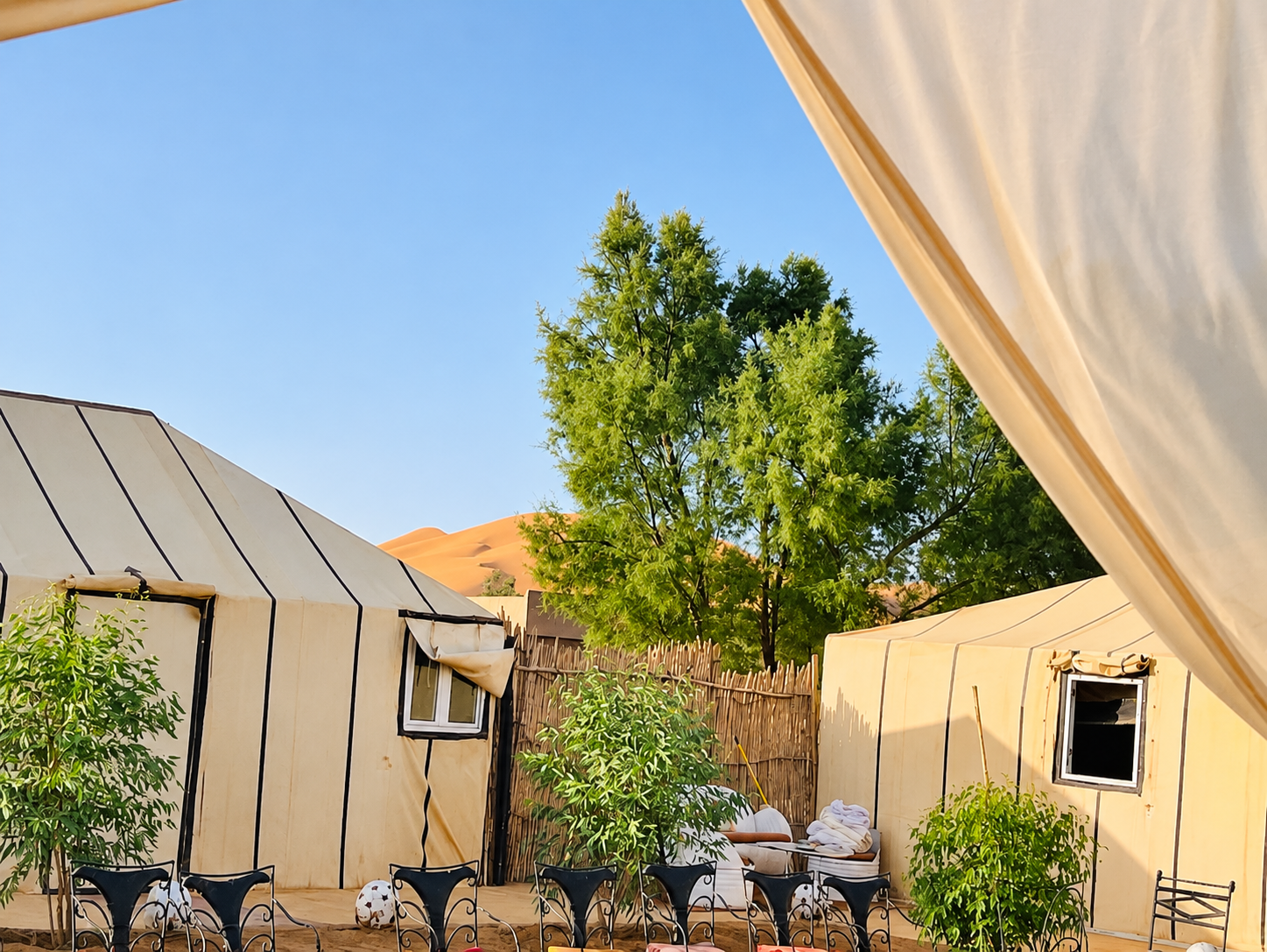
A night in the Sahara sounds wonderfully adventurous. A night in the Sahara with a proper double bed sounded even better after that dune climb. Our tent had white bedding, blue cushions, rugs and its own shower. I was very happy to accept this version of camping.
We had a Bedouin dinner, then an evening of firelight and music at camp. Later, Miguel stood looking up at the stars. We had only one night here, and I wanted to enjoy the bits that could not be squeezed into a photograph as much as the ones that could.
Eventually we went inside. A curtain separated the bathroom from the sleeping area, and during the night I passed it about five times. There was a dark shape on it, which I confidently filed away as a hole someone had sewn up.
A reasonable explanation. Except for the legs.
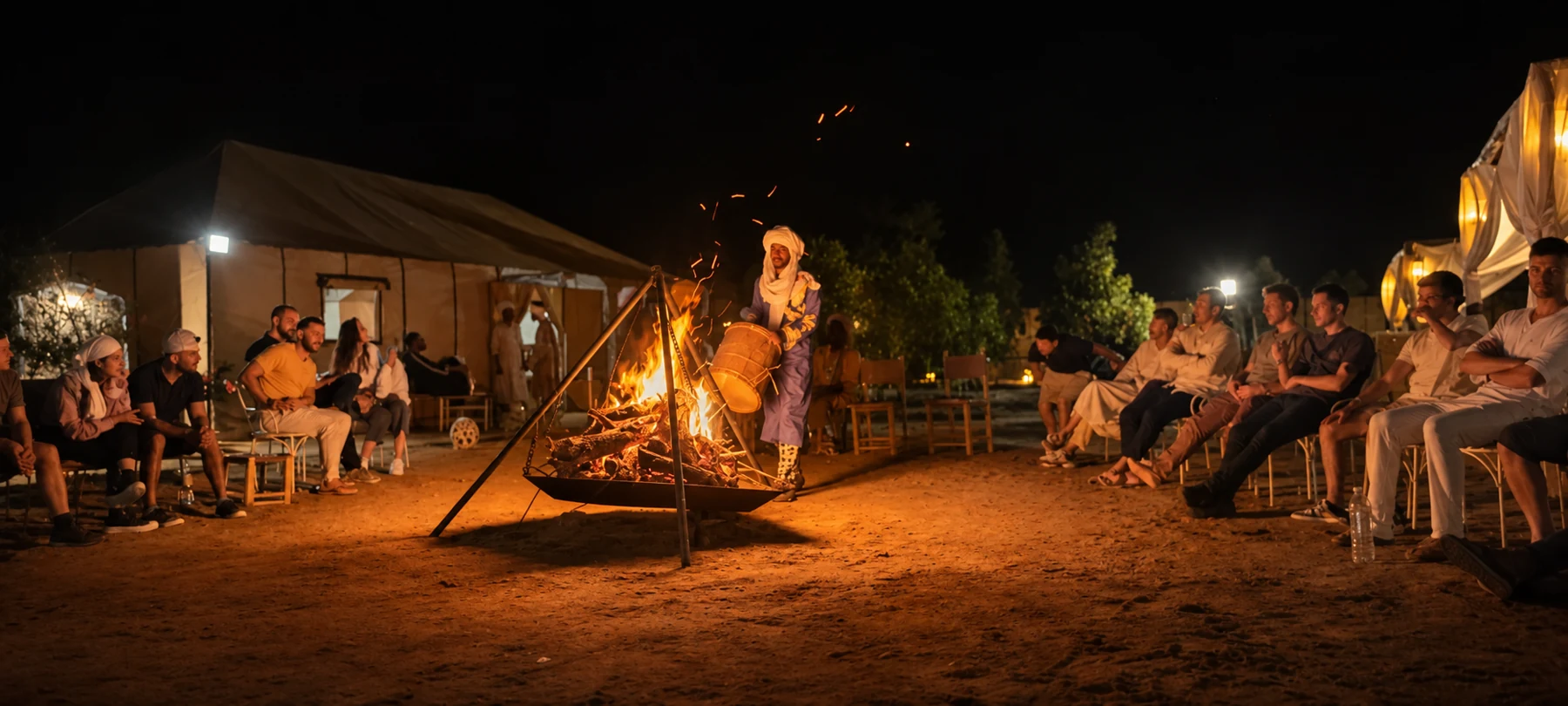
Around camp after dark 2 photos
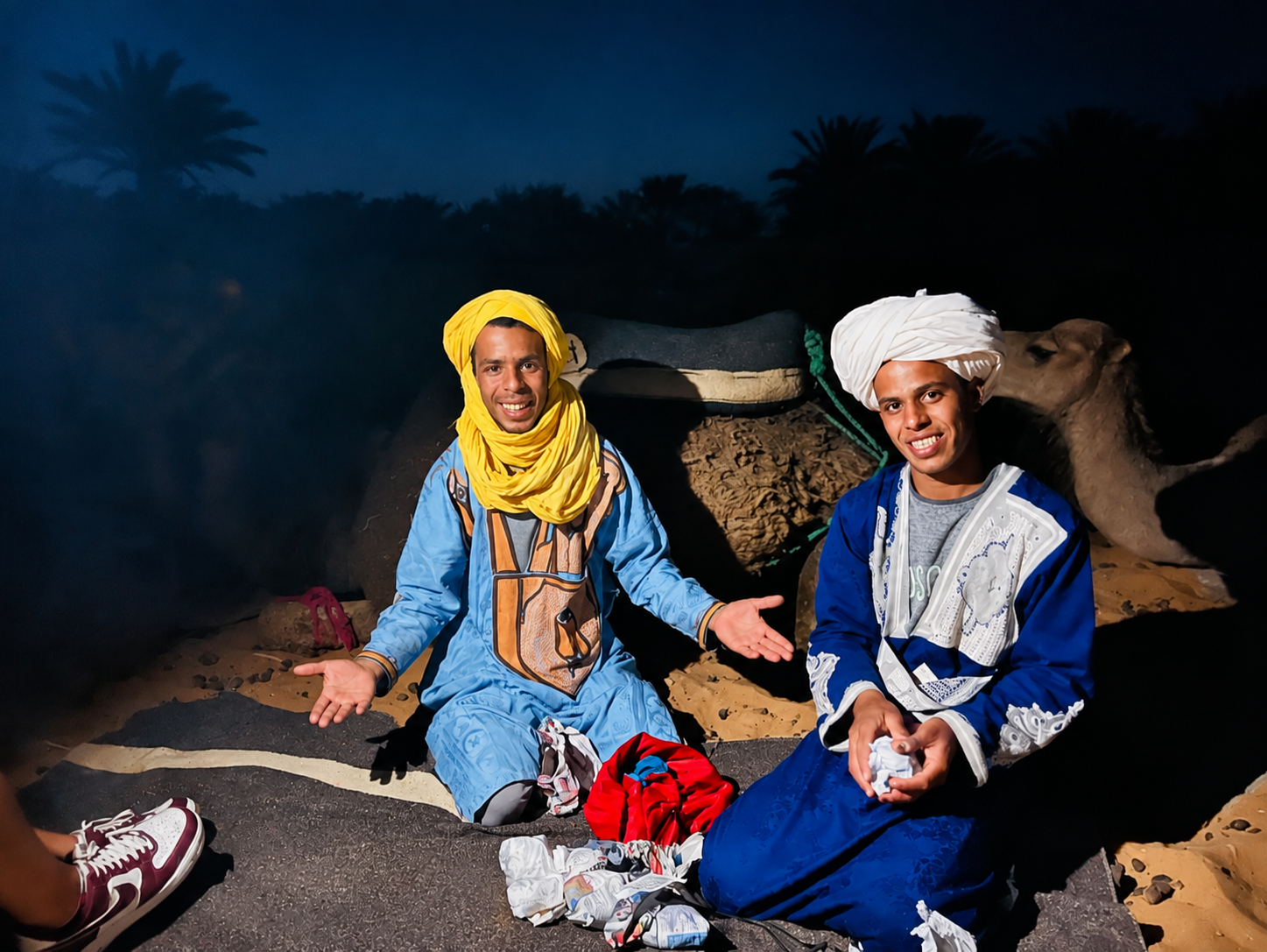
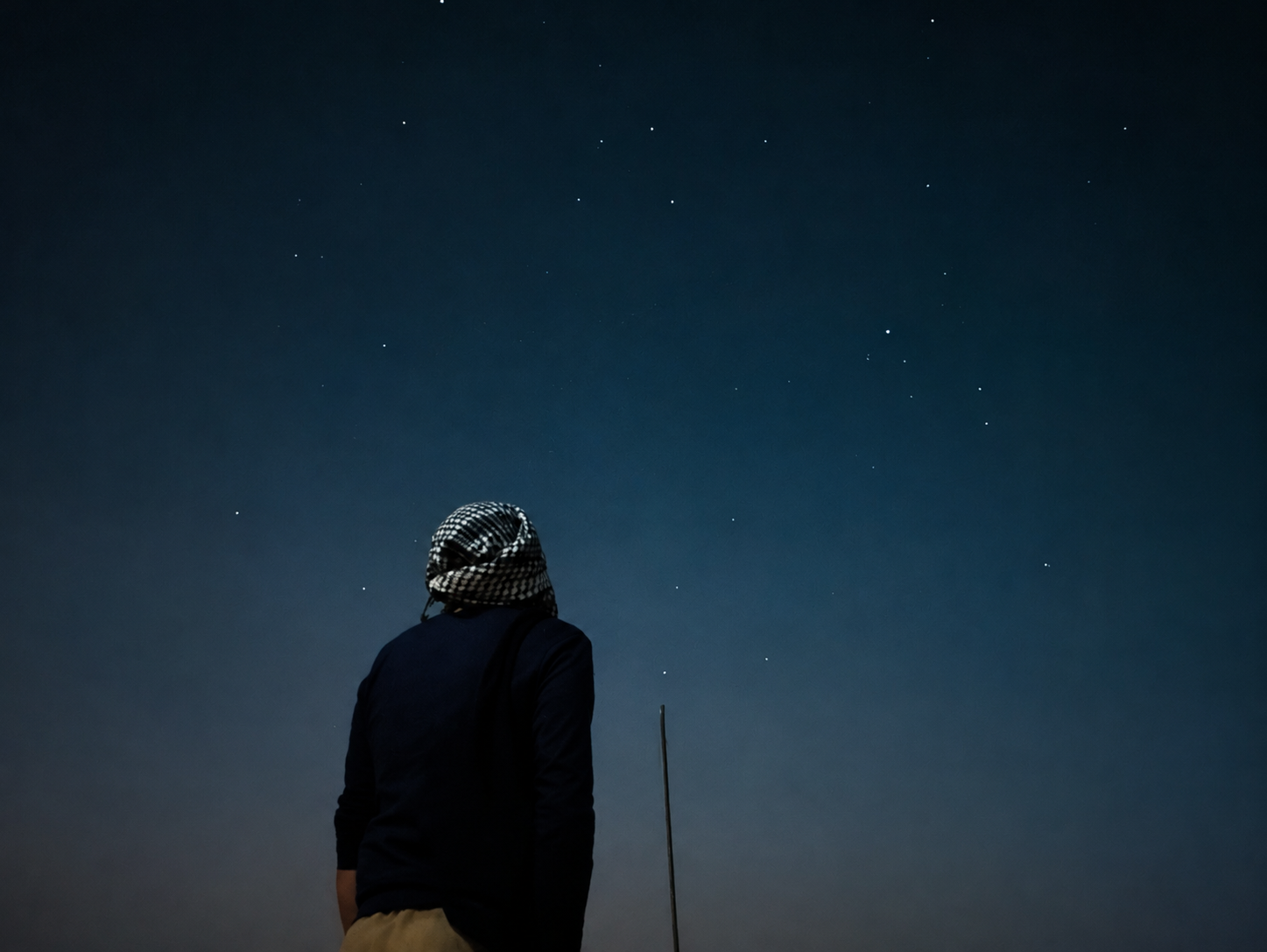
The “sewn-up hole” had legs
“Babe, there is a spider here.”
My answer was immediate: no, it was a hole in the curtain that had been sewn up. I had already seen it during the night. Several times, in fact. Miguel insisted that it was a huge, strange-looking spider, and unfortunately he was right about the important part: this was an animal, not needlework.
It was a camel spider. I find spiders creepy, so the discovery was properly unnerving, especially after all those sleepy trips past it. At the same time, I was intrigued. We showed it to other people before deciding that perhaps someone from the camp should tell us what to do with it.
We asked the cleaning woman. Her reaction was not the calm, practical answer we had expected: she began screaming and crying. Then the camp owner arrived, upset that we were frightening people. We were taken aback. We had gone from being startled ourselves to apparently causing a disturbance, without quite understanding how the morning had escalated so quickly.
At his recommendation, we released it outside the camp. That ended the encounter. What remained was the story of me confidently defending a “repair” in the curtain while Miguel tried to point out that it was alive. I still cannot believe how firmly I defended my interpretation. Next time, I might check whether the stitching moves.
Five trips past the curtain. One very confident explanation. Miguel was right.
If you have seen the famous camel-spider photograph with soldiers, shown by the Burke Museum, you will understand why the name rings a bell. Luckily, ours looked much less intimidating!
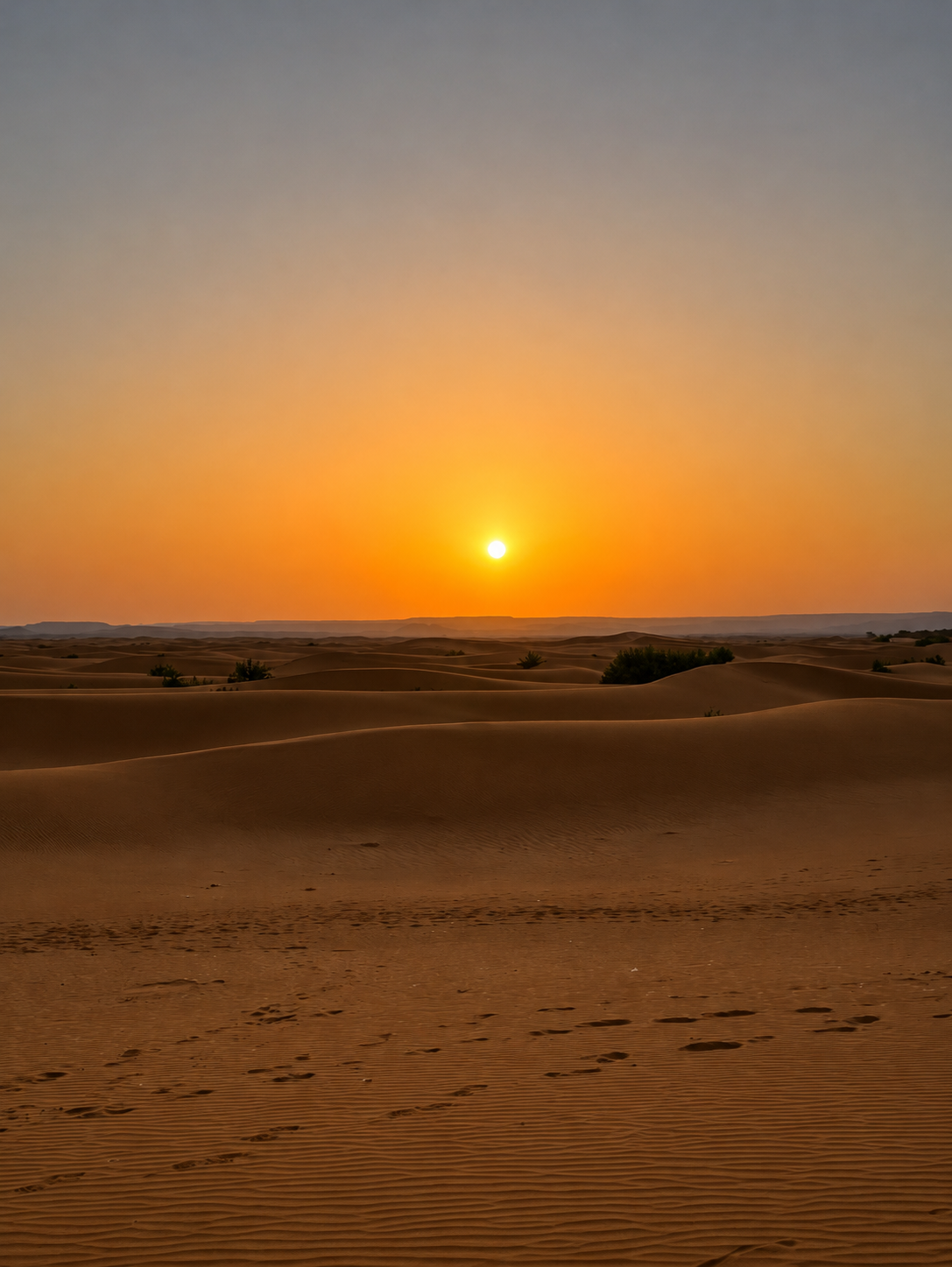
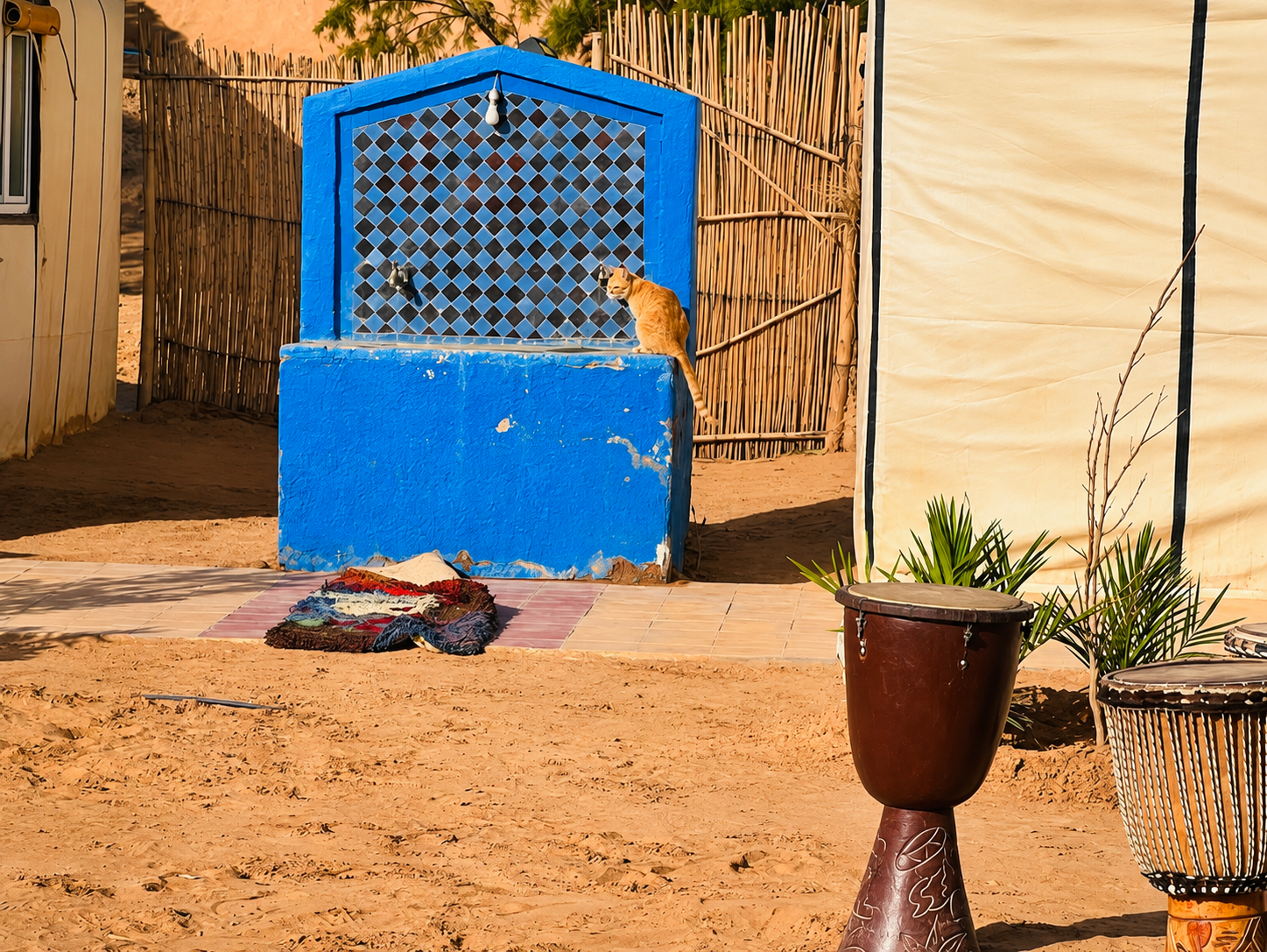
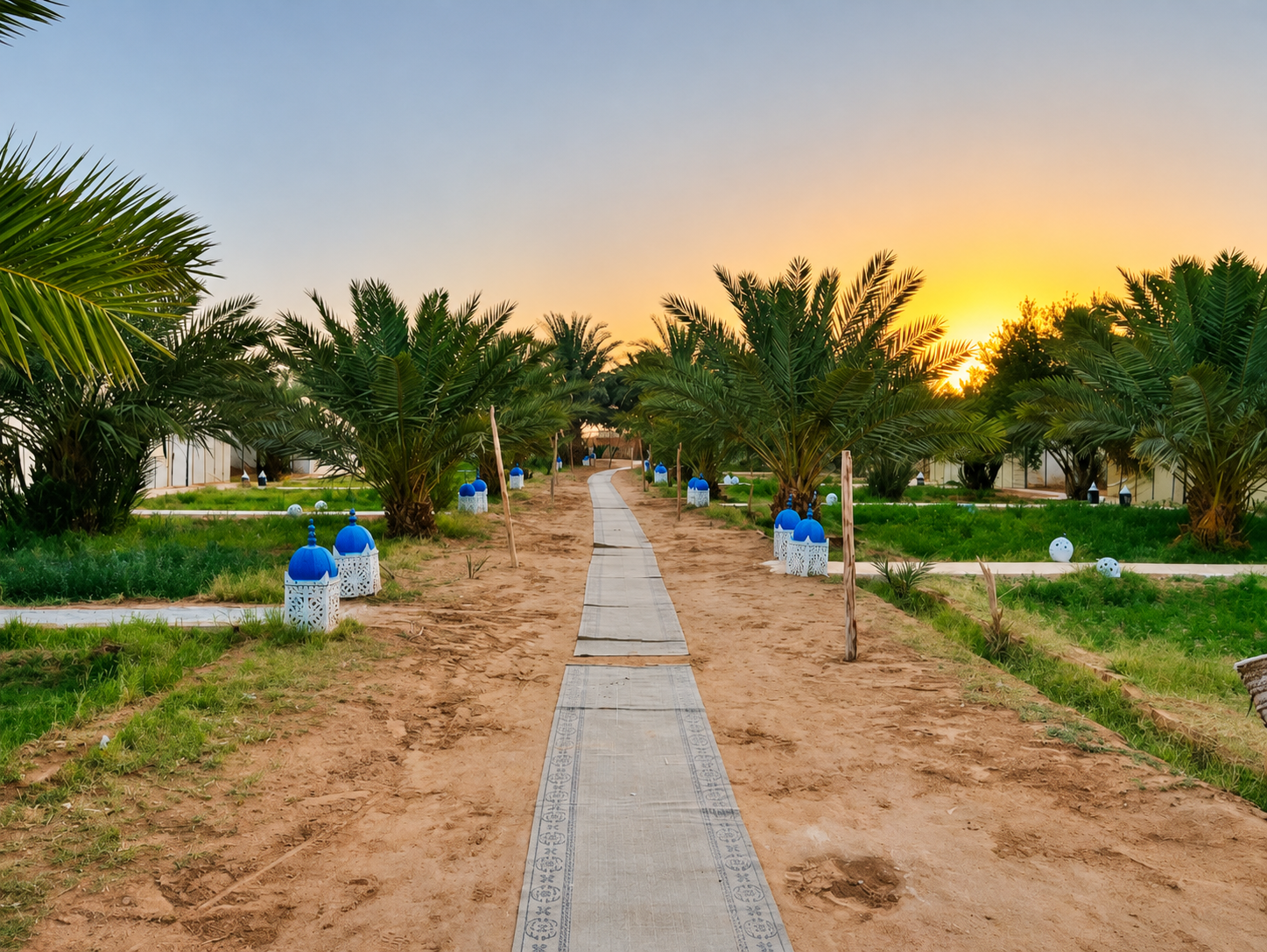
Outside, the sun was coming up over the dunes. The camp looked peaceful in the early light, with palms along the path and an orange cat perched on the blue fountain. After the curtain episode, that was a much more welcome animal encounter.
Sunday morning at camp 5 photos
The roof ride we still talk about
We climbed up for the jeep ride out of camp, Miguel going first with his backpack. Soon we were sitting together on the roof, shouting “This is Africa!” with the group to the people we passed. It was silly and loud, and we were having a wonderful time.
My hair was everywhere and I could hardly have grinned any more broadly. It is one of my favourite pictures of us from the trip, because it brings back the laughter immediately. Then came the much less eventful transfer back into the van for the long drive to Fez.
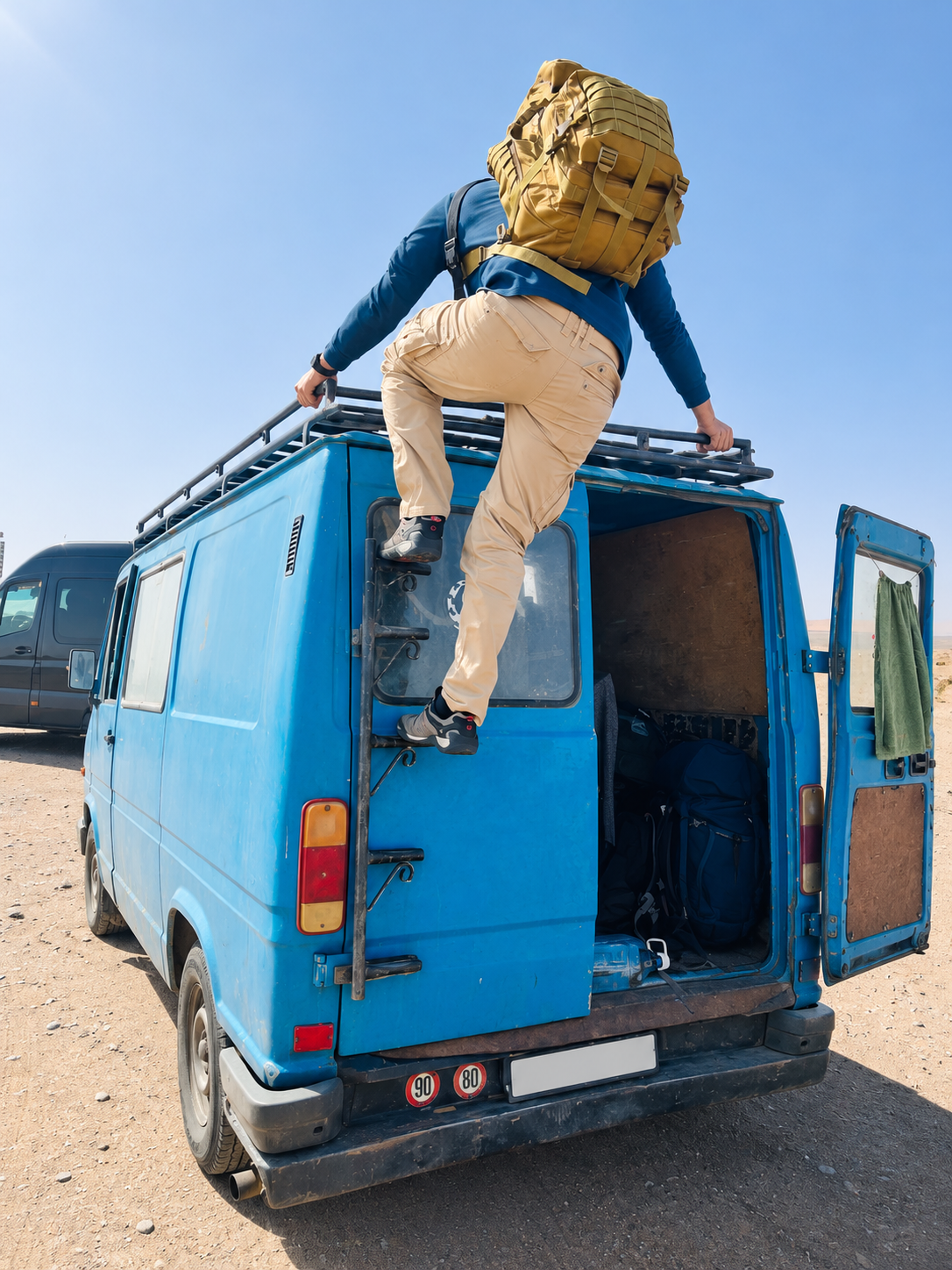
Up on the roof.
Grinning all the way.
Miguel on the way up, before we joined the rest of the group on the roof. A departure we still laugh about.
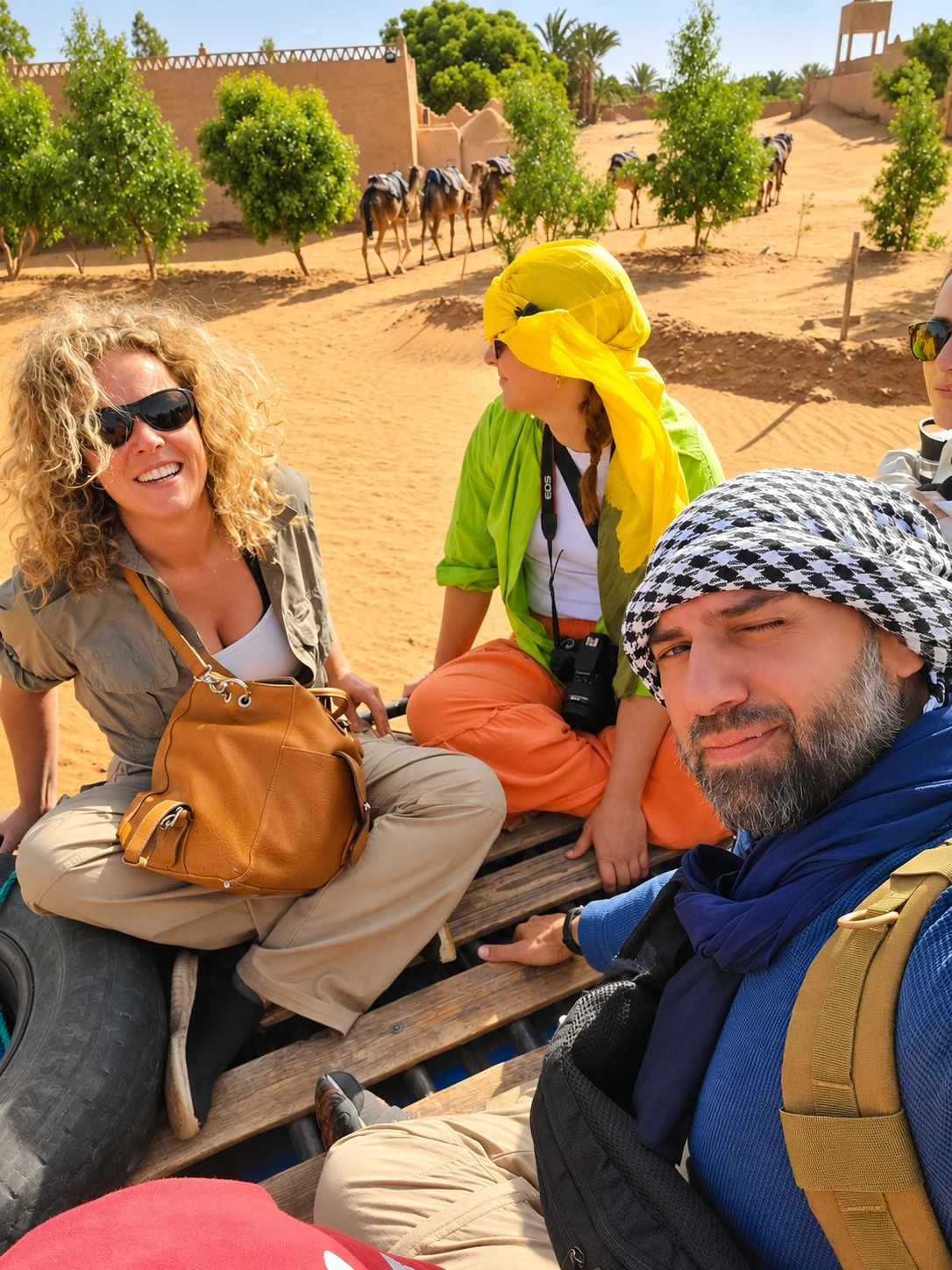
The wind had its own plans for my curls up there. For the ride back, I was happy with the holiday hair.
Back to Fez, with an evening still to come
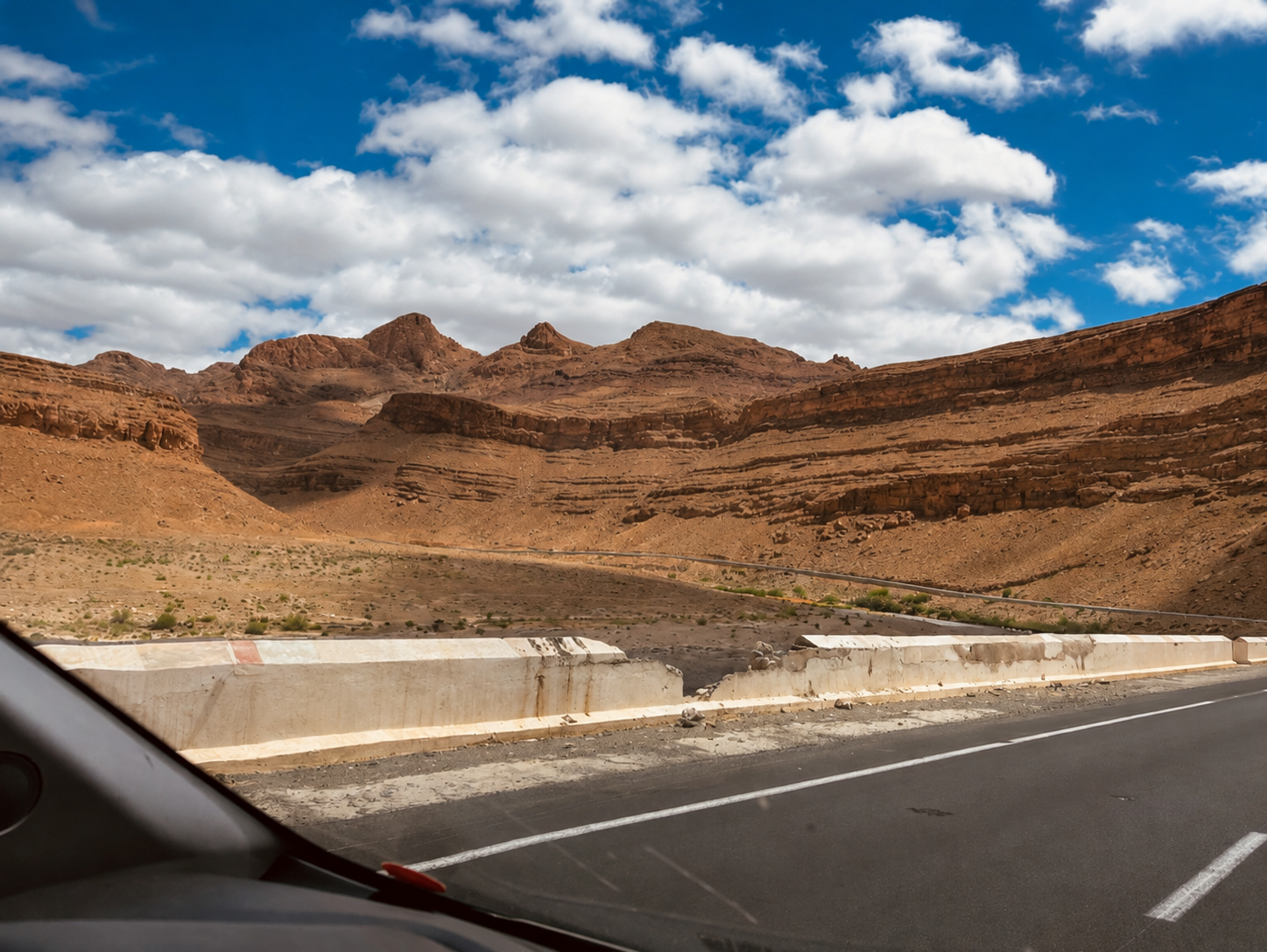
The dunes disappeared behind us as we headed back through the Atlas. There were long stretches of road, mountain bends and palms tucked into the landscape. By later Sunday we were in Fez again, with time for the souks, the tannery and dinner before our final riad stay.
Would I do it again? Yes. The camel ride, sunset and night at camp were the adventure I had hoped for. I would just make sure anyone booking the same short format understands the driving involved.
Check that your tour returns to Fez, as ours did, and read the current details for the camp, meals, transfers and activities. Our €95 price is what we paid in May 2023. You can find the original tour below and our full booking-cost breakdown here.
What I would check before booking a desert camp
The word “camp” can cover very different experiences. Ours had a proper bed and shower, but I would check the room description rather than assume every booking offers the same. Ask whether the bathroom is private, which meals are included, how luggage reaches camp and which activities are part of the price. If sandboarding is a priority, confirm it explicitly instead of relying on a photograph in the listing.
I would also ask for the pickup arrangements and the expected return window. The stops and traffic can affect a long driving day, so leave space around the excursion rather than treating the return time as an airport connection. For anyone unsure about the camel ride, ask the operator what alternatives they offer before booking.
For timing, the official tourism guide recommends October to April for the desert, noting very hot summers and cold winter nights. We went in May; that is our trip date, not a promise of the same conditions on another visit. Check the forecast close to departure and pack for the evening as well as the daytime.
My small essentials would be water, a layer for later, a charged phone and something to keep it tucked away from loose sand when I was not using it. The packing story shows what we carried. There is no need to turn a short adventure into a shopping expedition.
Practical questions, answered
Is a two-day Merzouga trip from Fez worth it?
We enjoyed our experience and would recommend it to travellers comfortable with substantial driving for one desert night. The dunes, camel ride and camp were highlights. Allow more time if you want a slower pace.
Did our desert trip return to Fez?
Yes. We left Fez on Saturday morning and returned on Sunday, then stayed in another Fez riad before flying home Monday morning. Do not assume a tour ending in Marrakech matches this itinerary.
What was the desert tent like?
Our tent had a proper double bed, a seating area and a bathroom section with a shower. That describes our 2023 stay; check the camp and room type included in any new booking.
Was sandboarding difficult?
I found staying upright harder than it looked, and my attempt ended in a fall. Climbing the dune for sunset was exhausting too: each step slid back through the loose sand. Give yourself plenty of time for the climb.